
Compare material/method
Why Do Some Shirts Feel Cooler?
Shirt comfort in hot weather depends on more than cotton versus polyester. Fabric weight, knit openness, moisture behaviour, fit, colour and printing all change how cool a shirt feels.
Direct answer: some shirts feel cooler because they let more air move through the fabric, hold less heat close to the body, release moisture faster and dry sooner after sweating. A lightweight eyelet or microfiber sports shirt can feel cooler during activity, while a light cotton shirt may feel cooler and softer when dry. The best choice depends on whether the wearer is sitting indoors, working actively, standing in direct sun or sweating for long periods.
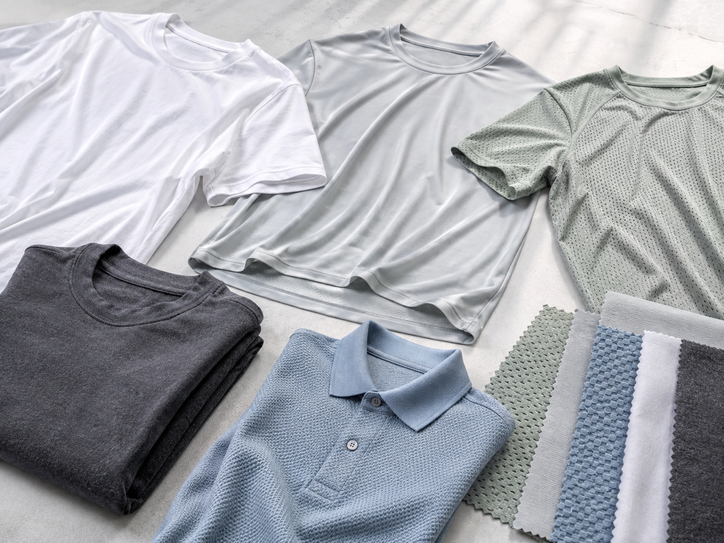
Quick Comparison
What Makes One Shirt Feel Cooler Than Another?
| Factor | Cooler Direction | Why It Matters | Example |
|---|---|---|---|
| Fabric weight | Lower to moderate GSM | Less fabric mass can trap less heat | Light sports tee vs heavyweight tee |
| Knit openness | More open structure | Allows more air exchange | Eyelet vs dense interlock |
| Moisture handling | Fast spreading and drying | Reduces prolonged dampness | Microfiber quick-dry vs wet cotton |
| Fit | Comfortably relaxed | Lets air move between shirt and skin | Relaxed tee vs tight fit |
| Colour | Lighter shades outdoors | Can absorb less heat from sunlight | White vs black |
| Print coverage | Smaller solid print areas | Keeps more base fabric exposed | Chest logo vs full-front transfer |
Airflow
Open knits and relaxed fits allow warm air to escape more easily during movement.
Drying Speed
Fabrics that retain less water usually feel lighter and less clammy after sweating.
Fabric Weight
Heavier shirts can feel warmer because more material sits around the body.
Uniform Options
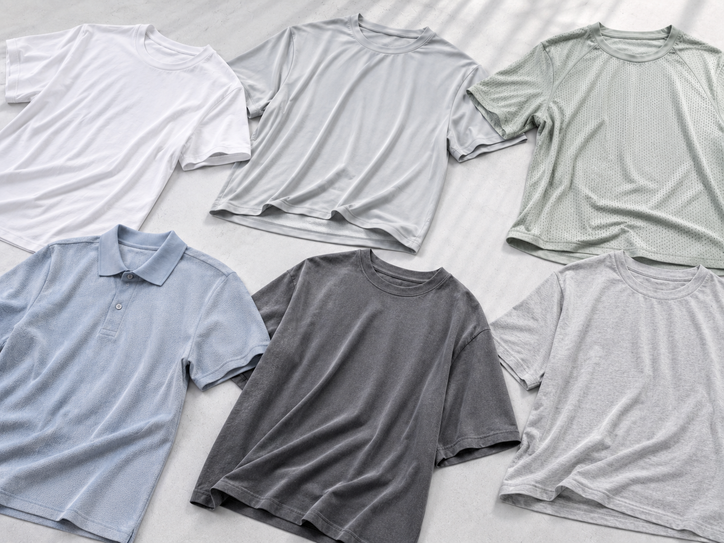
Different Shirts Feel Cool for Different Reasons
Lightweight Cotton T-Shirts
Soft and comfortable when dry. A good choice for office, indoor and lower-activity use.
Microfiber Quick-Dry Shirts
Useful for active work because they generally hold less water than cotton and dry faster after sweating.
Eyelet Sports Shirts
The small openings in the knit can improve ventilation while keeping the shirt lightweight.
Performance Polo Shirts
Light polyester or eyelet polos can give a collared look without the weight of some thick cotton polos.
Cotton-Blend Shirts
A middle option for staff who want a cotton-like feel with somewhat faster drying.
Heavyweight T-Shirts
Great for structure and merchandise, but usually not the coolest option for active outdoor use.
| Work Situation | Good Starting Shirt | Main Cooling Reason |
|---|---|---|
| Air-conditioned office | Light cotton or blend | Softness and low activity |
| Outdoor operations | Microfiber quick-dry | Fast drying and low water retention |
| Company sports day | Eyelet or light performance polyester | Airflow and moisture release |
| Retail or F&B | Light performance polo | Balanced appearance and comfort |
| Merchandise | Mid to heavyweight cotton | Structure is prioritised over maximum coolness |
Custom Branding
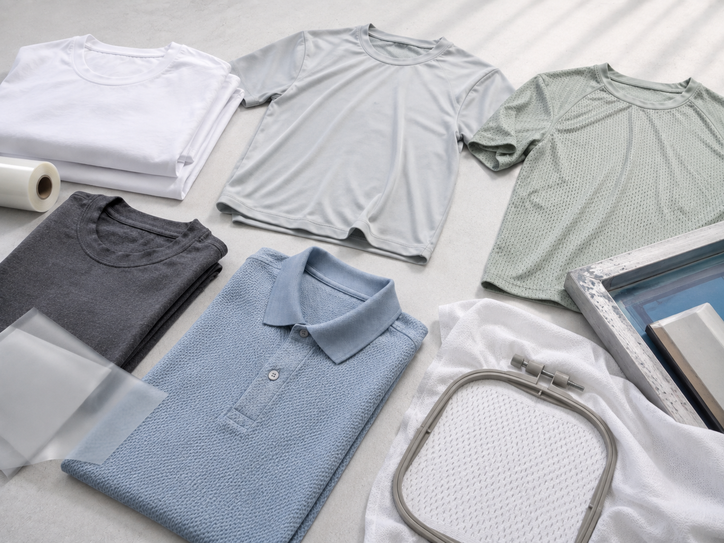
Printing Can Make a Cool Shirt Feel Warmer
The base shirt may be breathable, but large solid decorations can cover part of the fabric and reduce airflow in that area.
DTF Printing
Excellent for detailed artwork, but large solid transfers can feel warmer than the uncovered fabric.
Silkscreen Printing
Simple artwork with limited ink coverage can preserve more of the original fabric feel.
Embroidery
Small chest embroidery affects a limited area, but dense stitching adds local thickness and weight.
| Branding Style | Effect on Cooling Feel | Better Direction |
|---|---|---|
| Small chest logo | Low | Good for polos and uniforms |
| Large solid DTF print | Higher | Use only where needed |
| Large silkscreen area | Depends on ink coverage | Avoid unnecessary solid blocks |
| Dense embroidery | Local thickness increases | Keep compact on light fabrics |
- Do not judge coolness before considering print coverage.
- Do not cover most of an eyelet shirt with one large solid transfer unless intended.
- Do not use dense embroidery on very light fabric without testing.
- Do not assume decoration feels the same on cotton and microfiber.
Material, Colour and Design
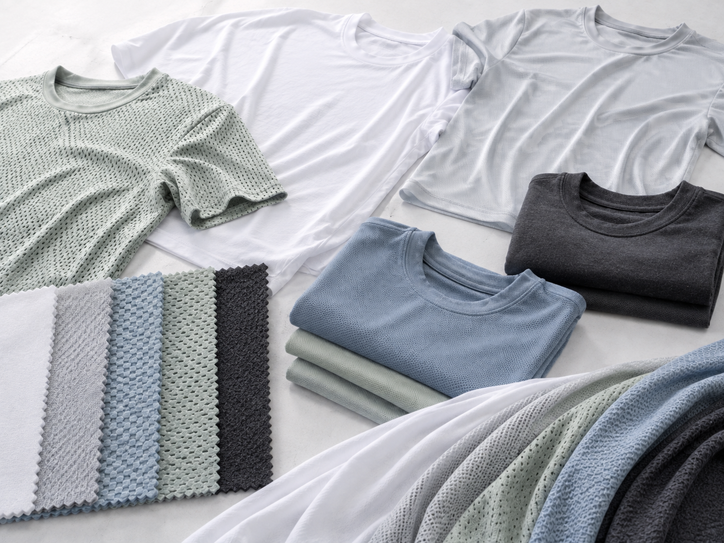
Six Details That Change Cooling Comfort
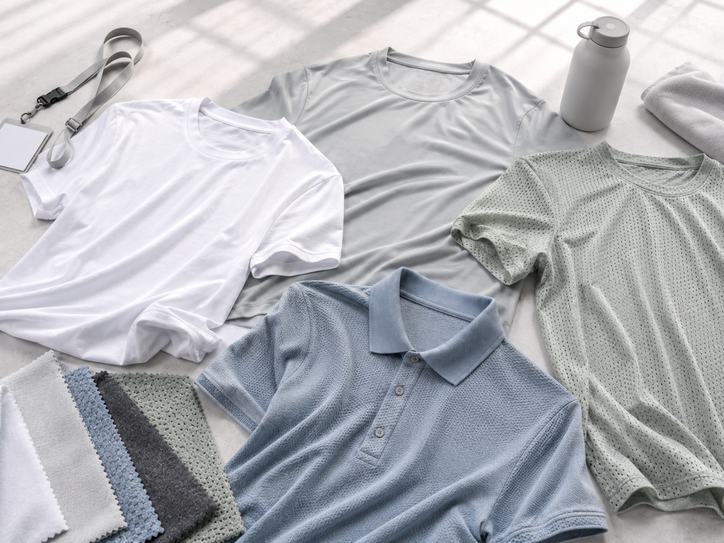
Fabric Weight
Lower GSM usually means less material, although thin fabric is not automatically more breathable.
Knit Structure
Eyelet, mesh-like and other open structures can allow greater air exchange than dense knits.
Fibre Type
Cotton absorbs more moisture, while many performance polyesters hold less water and dry faster.
Garment Fit
A slightly relaxed fit can allow more air movement than a tight shirt against the skin.
Shirt Colour
Light colours generally absorb less solar heat than dark colours during direct sun exposure.
Fabric Finishing
Moisture-management treatments can change how sweat spreads and how quickly the shirt feels dry.
Buying Process
Choose the Shirt by Real Wearing Conditions
- Identify the environment. Separate air-conditioned, indoor-active and outdoor roles.
- Estimate activity level. A front-desk employee and an outdoor event crew need different moisture handling.
- Compare GSM and knit openness. Check how much fabric there is and how easily air can pass.
- Think about sweat. If staff sweat regularly, drying behaviour becomes more important than first-touch softness.
- Review colour and print area. Light colours and smaller print coverage can help during outdoor use.
- Wear-test samples. An actual shirt test is more useful than choosing from fibre name alone.
Office Team
Light cotton or cotton blend may provide the softest familiar feel for lower-activity indoor roles.
Operations Team
Lightweight microfiber is often more practical when staff move frequently and sweat throughout the day.
Outdoor Event Crew
Eyelet or lightweight performance polyester in a lighter colour is a strong starting direction.
Buyer Checklist
Before Choosing a Shirt for Hot Weather
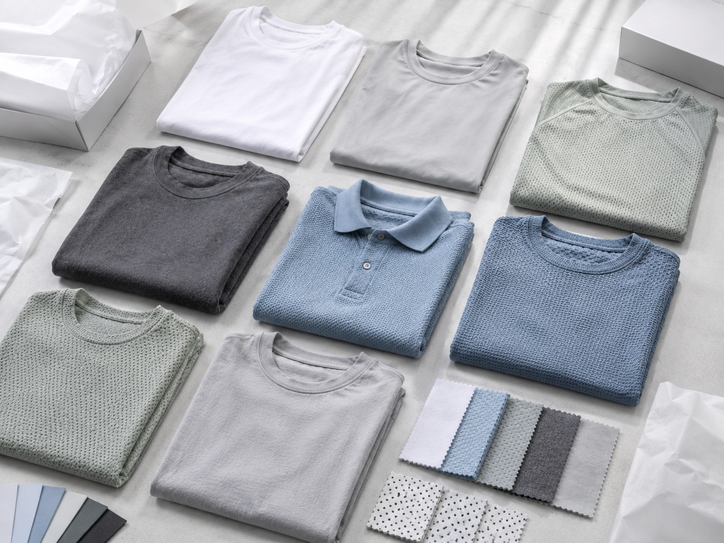
- Check the exact fibre composition
- Compare GSM
- Look at knit openness and airflow
- Consider how much the wearer will sweat
- Check drying behaviour
- Compare shirt fit
- Use lighter colours for prolonged direct-sun exposure
- Review how much of the shirt will be covered by printing
Why does one shirt feel cooler than another?
Usually because of differences in fabric weight, airflow, moisture handling, fit, colour and print coverage.
Is cotton always cooler than polyester?
No. Cotton can feel soft and cool when dry, but lightweight performance polyester can feel cooler during activity because it retains less water and dries faster.
Does lower GSM always mean cooler?
Not always. GSM matters, but knit openness, fit and moisture behaviour can be just as important.
Why does eyelet fabric feel airy?
The knit contains small openings that can allow more air to pass through than a tightly closed fabric.
Do dark shirts feel hotter outside?
Dark colours generally absorb more solar radiation than light colours, so colour can matter during direct-sun exposure.
Can printing make a shirt warmer?
Yes. A large solid transfer can block some airflow where it covers the fabric.
What is a good shirt for company sports day?
Lightweight microfiber or eyelet performance shirts are a strong starting choice because they balance airflow, low water retention and easy movement.
Choose for the Real Environment
Need Help Choosing a Cooler Shirt?
Send the staff role, indoor or outdoor use, preferred shirt style, quantity, size range and artwork. Uniform Johor can help compare cotton, microfiber, eyelet and other suitable options.
Related Uniform Johor Articles
Regional Network
Our Other Company Websites
Explore related uniform, apparel and printing websites within the same company or regional business network.
JC Print Malaysia
Main company website for uniforms and printing services.
Visit website →SelangorPrint
Uniform and custom printing support for Selangor buyers.
Visit website →Uniform Penang
Uniform and apparel resources for Penang customers.
Visit website →Uniform Sabah
Uniform and custom apparel resources for Sabah buyers.
Visit website →Uniform Singapore
Uniform and apparel printing information for Singapore.
Visit website →Uniform Hub Singapore
Additional uniform resources for Singapore organisations.
Visit website →Tanah Studio
Apparel and creative services for the Australian market.
Visit website →KitaPrint
Printing support for agents and resellers.
Visit website →