
Compare material/method
Why Do Clothes Shrink After Washing?
Clothes shrink when fibres and fabric structures change after exposure to water, heat, agitation or drying.
Direct answer: shrinkage usually happens when fibres relax, contract or return closer to their natural state after washing and drying. Cotton, wool and some other natural fibres are more prone to noticeable shrinkage than many synthetic fibres. High wash temperatures, tumble-dryer heat and aggressive agitation can increase the risk. The safest way to reduce shrinkage is to follow the care label, avoid unnecessary heat and use a gentler wash and drying routine when the garment allows it.

Quick Comparison
What Makes Clothes Shrink?
| Factor | How It Affects the Garment | Higher-Risk Situations |
|---|---|---|
| Hot water | Can encourage fibre movement and relaxation | Cotton, wool and heat-sensitive garments |
| Tumble-dryer heat | Heat and tumbling can increase dimensional change | Natural fibres and loosely structured fabrics |
| Agitation | Mechanical movement can alter fabric structure | Delicate knits and wool |
| First wash | Some garments release manufacturing tension | Untreated or less-stabilised fabrics |
| Repeated hot drying | Can gradually increase shrinkage or distortion | Frequently washed work and casual shirts |
| Wrong care method | Can cause more change than the fabric was designed to handle | Any garment when the care label is ignored |
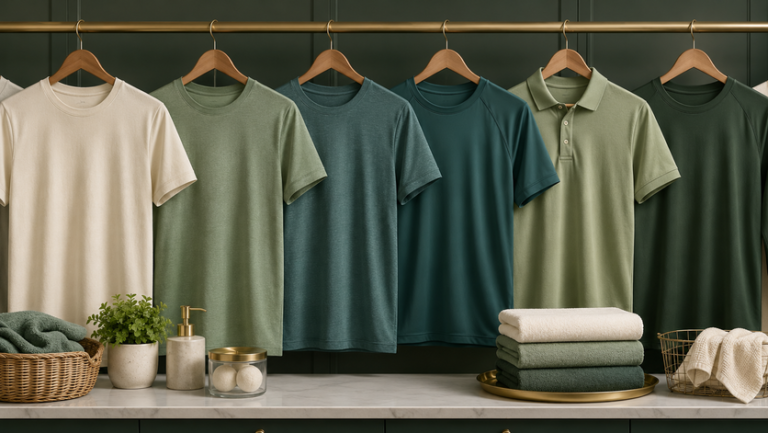
Fabric Comparison
Which Fabrics Shrink More Easily?
Cotton
Cotton is more likely to show noticeable shrinkage when exposed to repeated heat and drying.
Polyester
Polyester is generally more dimensionally stable than cotton, though excessive heat can still damage the garment.
Cotton-Poly Blends
Blends often shrink less than comparable 100% cotton garments, but actual behaviour depends on the blend and construction.
Wool
Wool can shrink significantly through heat, moisture and agitation because its fibres can felt together.
Stretch Fabrics
Elastane-containing fabrics may not shrink in the same way, but high heat can still affect fit and recovery.
Heavyweight T-Shirts
Fabric weight alone does not determine shrinkage; fibre, knit and finishing are more important.
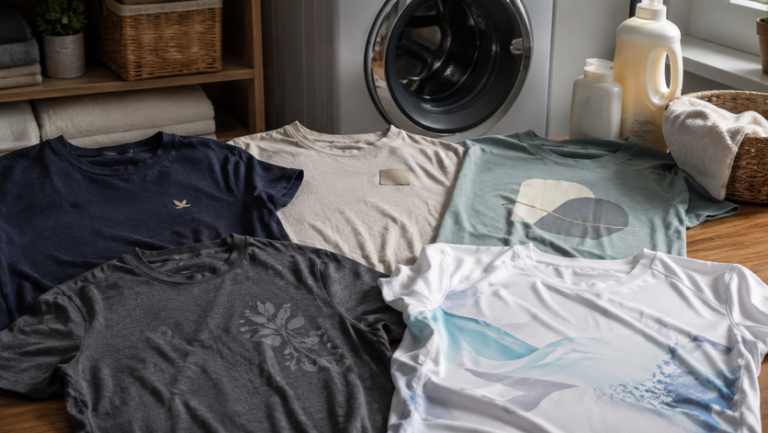
Printing and Branding
Shrinkage Can Also Affect Shirt Decoration
| Branding Method | Possible Shrinkage Effect | What Helps |
|---|---|---|
| DTF Printing | Fabric contraction can make a large transfer look more wrinkled or stressed | Use suitable garment care and avoid excessive heat |
| Silkscreen Printing | Heavy shrinkage can increase visible cracking or distortion | Match the print to a stable garment and follow care instructions |
| Sublimation | Print follows the polyester fabric because the colour is within the fibre | Protect the garment from excessive heat and distortion |
| Embroidery | Fabric can pucker around the stitched area if it shrinks differently | Use suitable stabilisation and garment care |
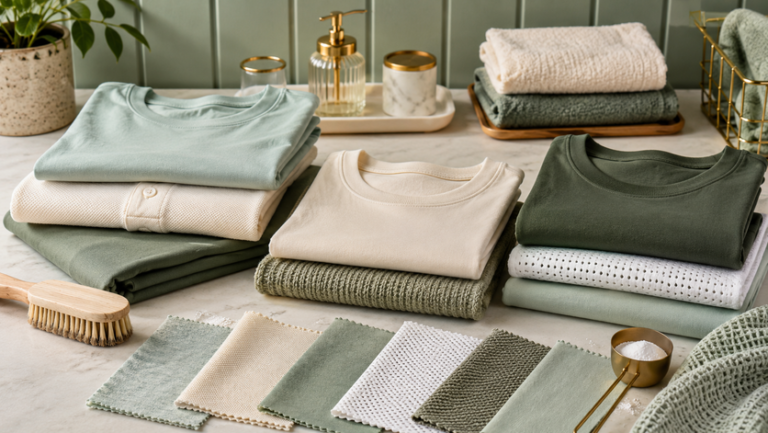
Material and Care
Why Heat Matters So Much
Fibre Relaxation
Some fibres relax after being stretched during manufacturing, which can reduce garment dimensions after washing.
Dryer Heat
High drying temperatures can encourage additional contraction, especially in natural fibres.
Water Temperature
Hot water can increase fibre movement, but the effect depends on the material and garment finish.
Knit Structure
Looser knitted fabrics may change dimensions more easily than tightly stabilised constructions.
Fabric Finishing
Pre-shrinking and stabilisation treatments can reduce later dimensional change, but not always eliminate it.
Repeated Washing
Small dimensional changes can accumulate when a garment is repeatedly washed and dried with too much heat.

Shrinkage Prevention
How to Reduce the Risk of Shrinking Clothes
- Read the care label. Use the recommended wash temperature and drying method.
- Avoid unnecessary hot water. Use a lower temperature when the care label allows it.
- Choose a suitable cycle. Delicate or loosely knitted garments may benefit from gentler movement.
- Reduce excessive dryer heat. High heat is a common cause of additional shrinkage.
- Remove garments when dry. Avoid leaving clothes tumbling at high heat longer than needed.
- Reshape when appropriate. Some garments can be gently reshaped while damp according to their care instructions.
Cotton Event Shirts
Moderate washing and drying temperatures can help reduce noticeable size change.
Daily Work T-Shirts
Frequent washing makes repeated dryer heat one of the biggest factors to manage.
Polyester Sports Shirts
Polyester is relatively stable, but very high heat can still distort the garment.
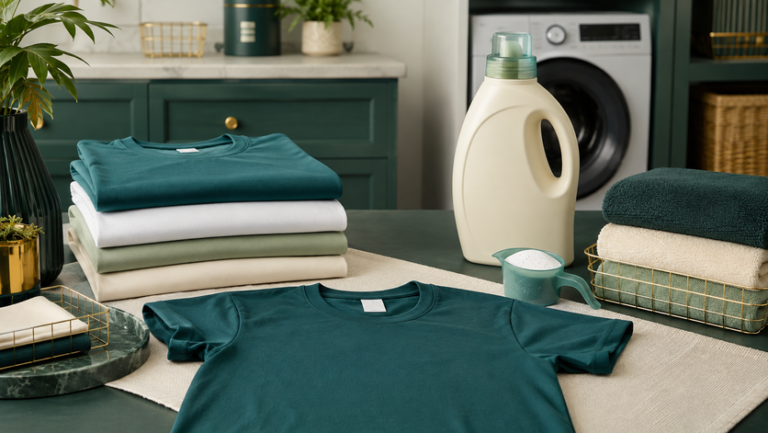
Laundry Checklist
How to Avoid Unnecessary Shrinkage
- Read the garment care label
- Avoid hotter water than necessary
- Use a suitable wash cycle
- Do not over-dry at high heat
- Be extra careful with cotton and wool
- Remember that blends can behave differently
- Protect prints from excessive heat
- Check sizing before ordering frequently washed uniforms
Why does cotton shrink after washing?
Cotton fibres and knitted structures can relax and contract after exposure to water and heat, especially during tumble drying.
Does polyester shrink?
Polyester usually shrinks less than cotton, but excessive heat can still distort or damage polyester garments.
Does cold water stop all shrinkage?
No. Lower temperatures can reduce the risk, but fabric structure, finishing and drying method also affect shrinkage.
Is the dryer more likely to shrink clothes than the washer?
High dryer heat is a common cause of noticeable shrinkage, although hot washing and agitation can also contribute.
Can a shrunken T-shirt return to its original size?
Sometimes a garment can be gently relaxed or reshaped while damp, but full recovery is not guaranteed.
Does higher GSM mean a shirt will shrink less?
Not necessarily. GSM describes fabric weight, while shrinkage depends more on fibre, knit structure, finishing and care.
Choose the Right Fabric
Need Shirts for Frequent Washing?
Send the intended use, preferred fabric, branding method and wash frequency. Uniform Johor can help compare shirt options for regular work, sports and event use.
Related Uniform Johor Articles
Regional Network
Our Other Company Websites
JC Print Malaysia
Main company website for uniforms and printing services.
Visit website →SelangorPrint
Uniform and custom printing support for Selangor buyers.
Visit website →Uniform Penang
Uniform and apparel resources for Penang customers.
Visit website →Uniform Sabah
Uniform and custom apparel resources for Sabah buyers.
Visit website →Uniform Singapore
Uniform and apparel printing information for Singapore.
Visit website →Uniform Hub Singapore
Additional uniform resources for Singapore organisations.
Visit website →Tanah Studio
Apparel and creative services for the Australian market.
Visit website →KitaPrint
Printing support for agents and resellers.
Visit website →