
Uniform Brand Johor
What Temperature Should You Wash Clothes At?
The best washing temperature depends on the fabric, colour, stain level, printing method and the garment care label.
Direct answer: cold or cool water is a good starting point for many everyday T-shirts, dark colours and printed garments because it reduces heat stress and colour movement. Warm water can help with heavier soil when the care label allows it. Hot water should only be used when the garment is designed to tolerate it, because excessive heat can increase shrinkage, fading and damage to stretch fibres or prints.

Quick Comparison
Cold, Warm or Hot Water?
| Temperature | Common Use | Main Caution |
|---|---|---|
| Cold / cool | Dark colours, printed shirts, delicate fabrics and many everyday loads | Heavy grease or soil may need better pre-treatment |
| Warm | Moderately soiled cotton, blends and work shirts when allowed | Check colourfastness and shrinkage risk |
| Hot | Only garments specifically designed to tolerate it | Higher risk of shrinkage, fading and damage to prints or stretch fibres |
Fabric and Shirt Type
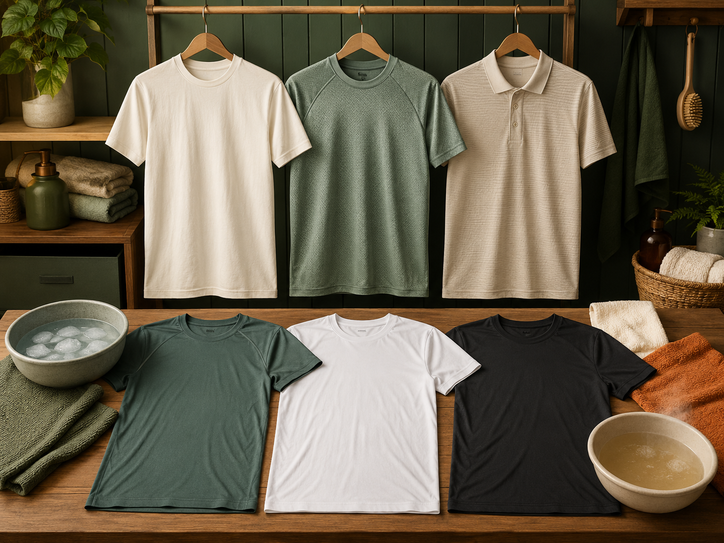
Different Fabrics Handle Heat Differently
Cotton T-Shirts
Cotton can tolerate a range of temperatures, but hotter washing can increase shrinkage and colour loss.
Quick-Dry Shirts
Polyester usually cleans well at lower temperatures and does not need very hot water for routine washing.
Cotton-Poly Blends
Use the temperature stated on the finished garment rather than assuming it behaves exactly like cotton.
Stretch Sports Shirts
Lower temperatures are generally kinder to elastane and spandex-containing garments.
Dark T-Shirts
Cooler water can help reduce dye movement and fading during repeated washing.
White T-Shirts
White does not automatically mean hot wash; fabric, print and care label still matter.
Printing and Branding
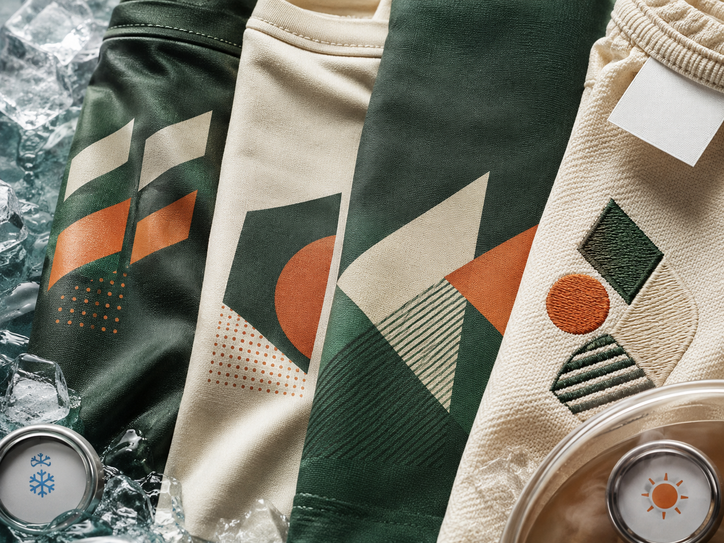
Wash Temperature Can Affect Shirt Decoration
| Branding Method | Temperature Concern | Better Approach |
|---|---|---|
| DTF Printing | High heat can stress the transfer layer over time | Use a cooler wash when the care label allows it |
| Silkscreen Printing | Repeated hot washing can speed up fading or cracking | Use a suitable moderate temperature and avoid harsh cycles |
| Sublimation | The print has no separate film, but polyester still dislikes excessive heat | Follow the polyester garment label |
| Embroidery | Heat can affect both fabric shape and thread appearance | Use the finished garment's care instructions |
Material and Colour
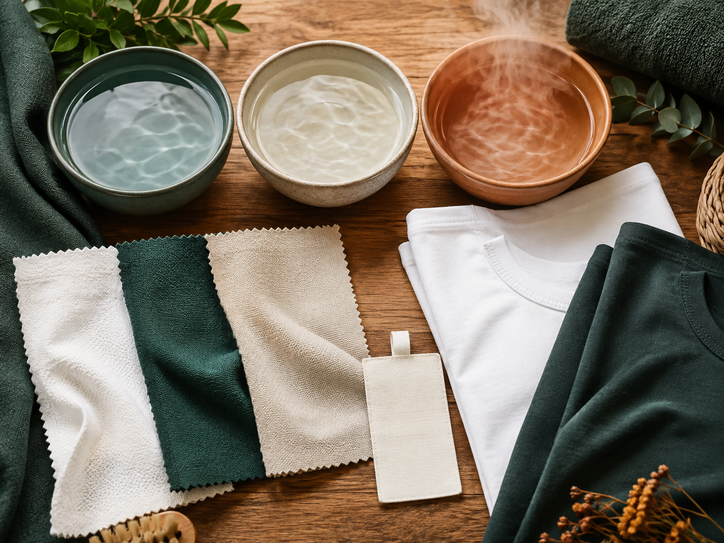
Six Factors That Should Decide the Temperature
Care Label
This should be your first reference because it reflects the finished garment.
Fibre Type
Cotton, polyester, wool and stretch blends react differently to heat.
Shirt Colour
Dark and bright colours often benefit from cooler washing to reduce fading.
Soil Level
Heavier dirt may need stronger pre-treatment or a warmer wash if allowed.
Branding Method
DTF, silkscreen and other surface prints usually benefit from avoiding unnecessary heat.
Shrinkage Risk
Hotter washing can increase dimensional change in some fabrics and garments.

Washing Process
How to Choose the Right Temperature
- Check the care label. Find the maximum permitted wash temperature.
- Check colour and fabric. Dark colours and heat-sensitive fabrics usually need more caution.
- Pre-treat stains. Do not use hotter water as the only solution for grease or heavy soil.
- Choose the lowest effective temperature. Cooler washing is often enough for everyday shirts.
- Protect printed garments. Turn them inside out and avoid unnecessary heat.
- Dry according to the label. Wash temperature and dryer heat should both be considered.
Daily Work Shirts
Use a moderate temperature that removes soil without shortening garment life.
Quick-Dry Sports Shirts
Cooler washing is usually suitable for routine sweat and odour removal.
White Staff Shirts
Treat stains first and only use hotter washing when the care label allows it.

Laundry Checklist
Before Choosing a Wash Temperature
- Read the garment care label
- Check whether the shirt is cotton, polyester or a blend
- Use cooler water for dark colours when appropriate
- Pre-treat grease and heavy stains first
- Turn printed shirts inside out
- Avoid unnecessary hot washing
- Protect stretch fabrics from excessive heat
- Match the drying temperature to the garment too
Is cold water good for washing T-shirts?
Yes. Cold or cool water is suitable for many everyday T-shirts, dark colours and printed garments when the care label allows it.
When should I use warm water?
Warm water can help with moderate soil, cotton and blends when the garment is designed to tolerate it.
Is hot water better for white clothes?
Not automatically. White shirts can still shrink, contain heat-sensitive fibres or have prints that dislike repeated hot washing.
Can hot water shrink clothes?
Yes. Higher temperatures can increase shrinkage in some cotton and other natural-fibre garments.
What temperature is best for polyester sports shirts?
Cooler or moderate washing is usually enough for routine care, but the garment label should always be followed.
Does hotter water remove stains better?
Sometimes, but not every stain responds well to heat. Pre-treatment is often more important than simply increasing water temperature.
Choose Practical Shirts
Need Shirts for Frequent Washing?
Send the intended use, fabric preference, shirt colour, branding method and wash frequency. Uniform Johor can help compare practical shirt options for regular work, sports and event use.
Related Uniform Johor Articles
Regional Network
Our Other Company Websites
JC Print Malaysia
Main company website for uniforms and printing services.
Visit website →SelangorPrint
Uniform and custom printing support for Selangor buyers.
Visit website →Uniform Penang
Uniform and apparel resources for Penang customers.
Visit website →Uniform Sabah
Uniform and custom apparel resources for Sabah buyers.
Visit website →Uniform Singapore
Uniform and apparel printing information for Singapore.
Visit website →Uniform Hub Singapore
Additional uniform resources for Singapore organisations.
Visit website →Tanah Studio
Apparel and creative services for the Australian market.
Visit website →KitaPrint
Printing support for agents and resellers.
Visit website →