
Embroidery Services Johor
Small Logo Embroidery Design Tips
Learn how to simplify small logos, improve text clarity, choose suitable colours and prepare artwork for cleaner embroidery on polo shirts, caps and other garments.
Direct answer: Small embroidered logos work best when the artwork uses simple shapes, thicker lines, limited tiny text and clear colour contrast. Very fine details, narrow gaps and complex gradients should be simplified before digitising so the stitched logo remains readable at a small size.
Design Basics
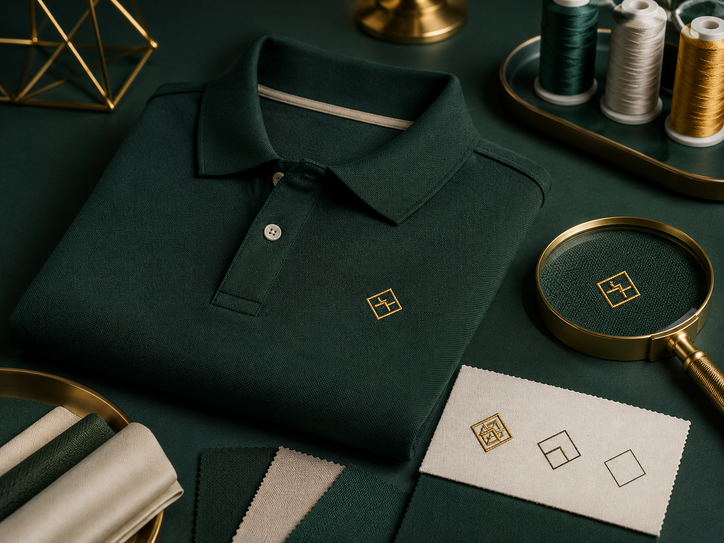
Why Small Logos Need Simpler Artwork
Embroidery builds a logo using thread and stitches. At a small size, there is less room for fine lines, tiny lettering and narrow spaces. Simplifying the artwork helps the final result stay clear instead of becoming crowded.
Thread Has Physical Thickness
A line that looks sharp on a screen may become heavier once it is converted into stitches.
Tiny Gaps Can Close Up
Narrow spaces between letters, shapes or outlines may lose separation at small embroidery sizes.
Fine Text Can Lose Clarity
Very small wording may become difficult to read, especially when the font is narrow or decorative.
Dense Logos Can Distort Fabric
A heavily filled design may feel stiff or pull on lightweight fabric when the stitch area is too concentrated.
Artwork Cleanup
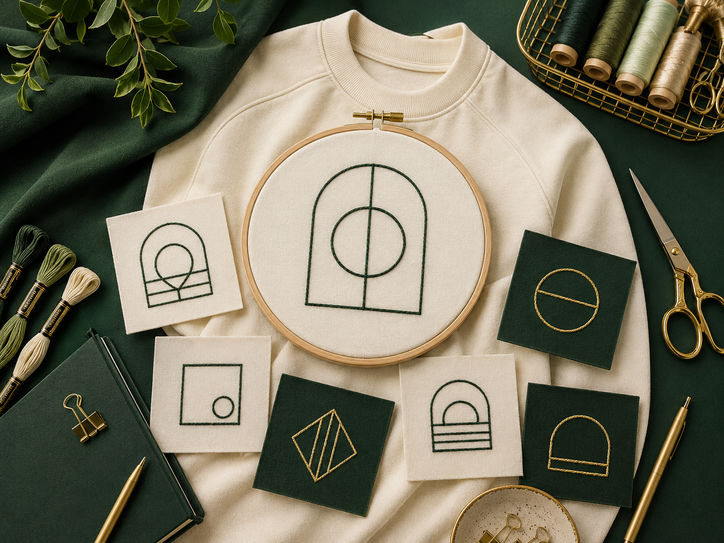
Simplify Lines, Text and Shapes
Use Thicker Lines
Replace hairline details with stronger strokes that can remain visible after digitising.
Reduce Tiny Text
Keep only essential wording. Remove taglines that become too small to read at the intended embroidery size.
Open Up Small Spaces
Increase gaps between letters and shapes so the stitched areas do not merge together.
Remove Gradients
Convert gradients into solid colour sections or a simpler thread-colour arrangement.
Control Outlines
Thin outlines may disappear, while heavy outlines may crowd the logo. Keep only the borders that improve recognition.
Protect the Main Symbol
Keep the most recognisable icon, initials or shape as the visual priority.
| Artwork Element | Better Direction | Avoid |
|---|---|---|
| Small text | Short, bold and clearly spaced | Long taglines in narrow fonts |
| Thin lines | Thicker and more consistent strokes | Hairline details |
| Gradients | Solid thread colours | Photographic shading |
| Close shapes | More open spacing | Tight gaps that may close |
| Fine texture | Simple filled or outlined sections | Very small repeated patterns |
Colour Planning
Choose Thread Colours With Strong Contrast
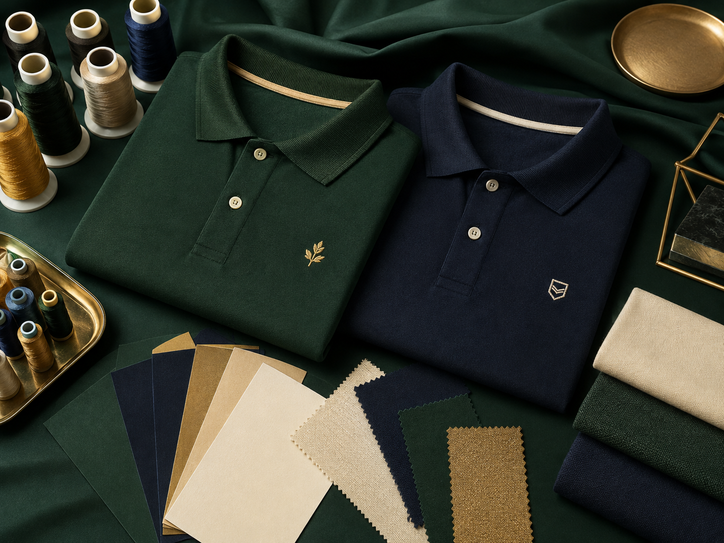
Thread colour should be selected together with the garment colour. A small logo needs enough contrast to remain visible, especially when the design includes thin letters or a small icon.
Dark Shirt, Light Thread
White, gold, light grey or brighter brand colours can stand out clearly on black, navy and dark-coloured garments.
Light Shirt, Dark Thread
Black, navy, dark green or deep red usually provide better definition on white, beige and light grey shirts.
Brand Colour Matching
Select the closest available thread colour and review it against the actual garment rather than relying only on a digital preview.
- Avoid dark thread on a dark shirt with low contrast.
- Avoid pale thread on white or very light garments.
- Avoid using too many colours in a very small logo.
- Check colour visibility under normal indoor lighting.
Garment Compatibility
Match the Logo to the Garment
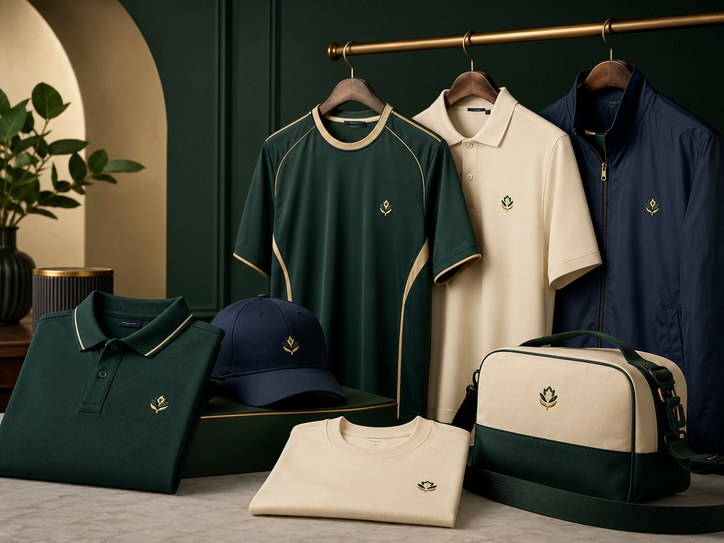
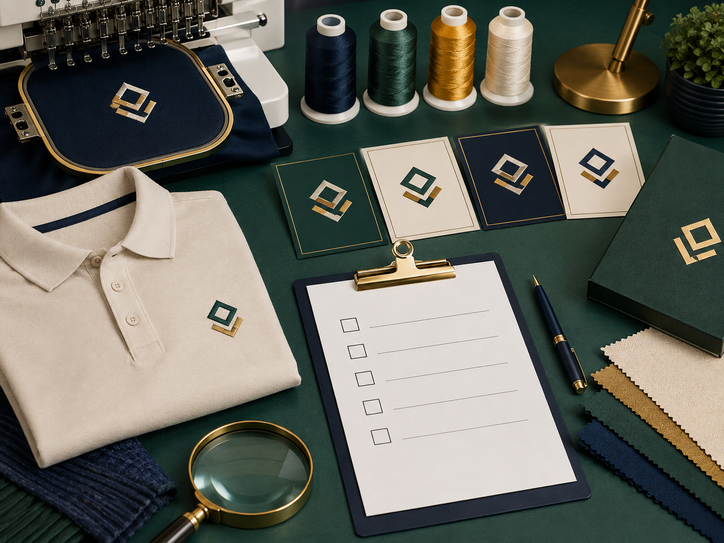
The same embroidery file can behave differently on a structured polo, thin sports shirt, cap or soft T-shirt. The fabric and placement should be considered before the logo is digitised.
Polo Shirts
A left-chest logo often works well because the garment has a more structured surface and professional appearance.
Caps
Cap embroidery may need a simplified layout because the curved surface and centre seam can affect small details.
T-Shirts
Softer T-shirt fabric may require careful stabilisation and a lighter embroidery approach to reduce pulling.
Sports Shirts
Keep the logo small and controlled so the decorated area does not feel unnecessarily heavy on lightweight fabric.
Jackets
More structured outerwear can support a different stitch density than a thin performance shirt.
Bags
Flat panels may suit small logos, but seams, pockets and access for the embroidery frame should be checked.
| Garment | Good Starting Placement | Main Check |
|---|---|---|
| Polo shirt | Left chest | Logo width and spacing from placket |
| Cap | Front panel | Curved surface and centre seam |
| T-shirt | Small chest or sleeve | Fabric stretch and stability |
| Sports shirt | Small chest area | Weight and stiffness of the embroidered area |
| Jacket | Chest or upper sleeve | Panel access and garment structure |
Garment Compatibility
Match the Logo to the Garment
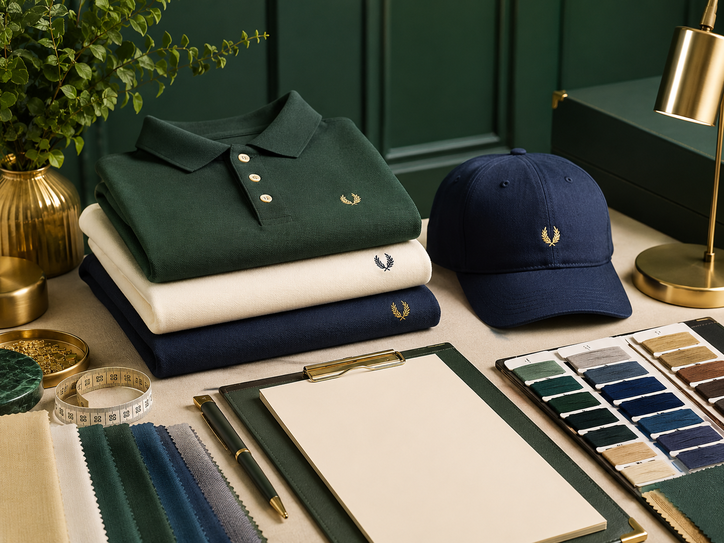
The same embroidery file can behave differently on a structured polo, thin sports shirt, cap or soft T-shirt. The fabric and placement should be considered before the logo is digitised.
Polo Shirts
A left-chest logo often works well because the garment has a more structured surface and professional appearance.
Caps
Cap embroidery may need a simplified layout because the curved surface and centre seam can affect small details.
T-Shirts
Softer T-shirt fabric may require careful stabilisation and a lighter embroidery approach to reduce pulling.
Sports Shirts
Keep the logo small and controlled so the decorated area does not feel unnecessarily heavy on lightweight fabric.
Jackets
More structured outerwear can support a different stitch density than a thin performance shirt.
Bags
Flat panels may suit small logos, but seams, pockets and access for the embroidery frame should be checked.
| Garment | Good Starting Placement | Main Check |
|---|---|---|
| Polo shirt | Left chest | Logo width and spacing from placket |
| Cap | Front panel | Curved surface and centre seam |
| T-shirt | Small chest or sleeve | Fabric stretch and stability |
| Sports shirt | Small chest area | Weight and stiffness of the embroidered area |
| Jacket | Chest or upper sleeve | Panel access and garment structure |
Embroidery Design FAQ
Questions About Small Logo Embroidery
Can very small text be embroidered clearly?
It depends on the font, letter spacing, garment and final size. Very small or narrow text may need to be enlarged, simplified or removed.
Should gradients be kept in the logo?
Gradients are usually better converted into solid thread colours or simplified sections for small embroidery.
How many thread colours should a small logo use?
Use only the colours needed to preserve the logo identity. Fewer colours can make a small design cleaner and easier to read.
Is embroidery suitable for thin sports shirts?
It can be suitable for a small logo, but the design should avoid unnecessary density and the garment should be checked for stability.
Do I need to provide a vector logo?
A vector file is helpful, but a clear high-resolution image can still provide a better starting reference than a small, blurred screenshot.
Can Uniform Johor simplify my logo for embroidery?
The team can review the artwork and advise which details may need adjustment before digitising and production.
Prepare the Logo Properly
Need Help With a Small Embroidered Logo?
Send your logo, garment type, colour, quantity, preferred placement and Johor delivery area. Uniform Johor can review the artwork and suggest a practical embroidery direction.
Related Uniform Johor Guides
Regional Network
Our Other Company Websites
Explore related uniform, apparel and printing websites within the same company or regional business network.
JC Print Malaysia
Main company website for uniforms and printing services.
Visit website →SelangorPrint
Uniform and custom printing support for Selangor buyers.
Visit website →Uniform Penang
Uniform and apparel resources for Penang customers.
Visit website →Uniform Sabah
Uniform and custom apparel resources for Sabah buyers.
Visit website →Uniform Singapore
Uniform and apparel printing information for Singapore.
Visit website →Uniform Hub Singapore
Additional uniform resources for Singapore organisations.
Visit website →Tanah Studio
Apparel and creative services for the Australian market.
Visit website →KitaPrint
Printing support for agents and resellers.
Visit website →Disclosure: These are related company or regional network websites and are not presented as independent recommendations.