
Uniform Brand Johor
Should You Zip Zippers Before Washing?
Zippers can snag other clothes or bend during washing when they are left open, especially on jackets, hoodies and workwear.
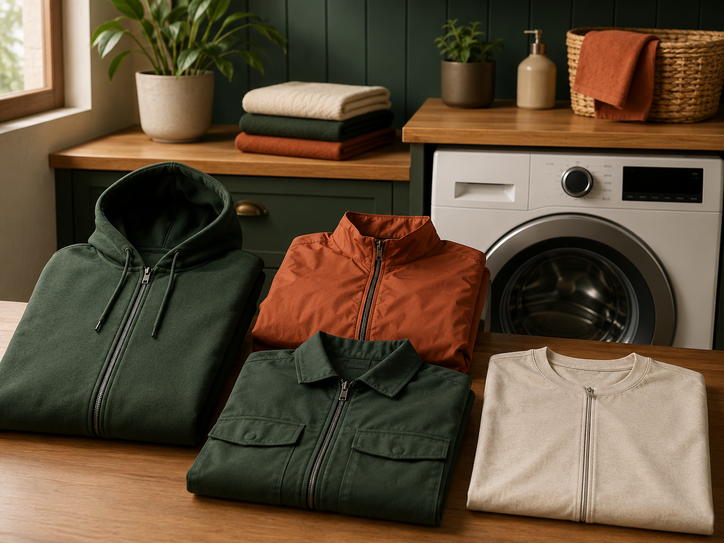
Direct answer: yes, it is usually better to close zippers before washing. A closed zipper keeps the teeth aligned, reduces snagging and limits the chance of the zipper pull catching other garments. For extra protection, turn the garment inside out when the care label allows it. Buttons are different: they are usually better left unbuttoned so the button and buttonhole are not placed under extra tension.
Quick Comparison
What Should You Close Before Washing?
| Fastener | Before Washing | Why |
|---|---|---|
| Zippers | Usually close them | Helps prevent snagging and keeps zipper teeth aligned |
| Buttons | Usually leave them open | Reduces tension on buttons, thread and buttonholes |
| Hooks and clasps | Secure them when possible | Reduces snagging on other garments |
| Velcro-style fasteners | Fasten them | Stops the rough side catching on fabric |
| Drawstrings | Secure loosely if needed | Helps reduce tangling without stressing the fabric |
Garment Type
Which Clothes Benefit Most From Zipping Up?
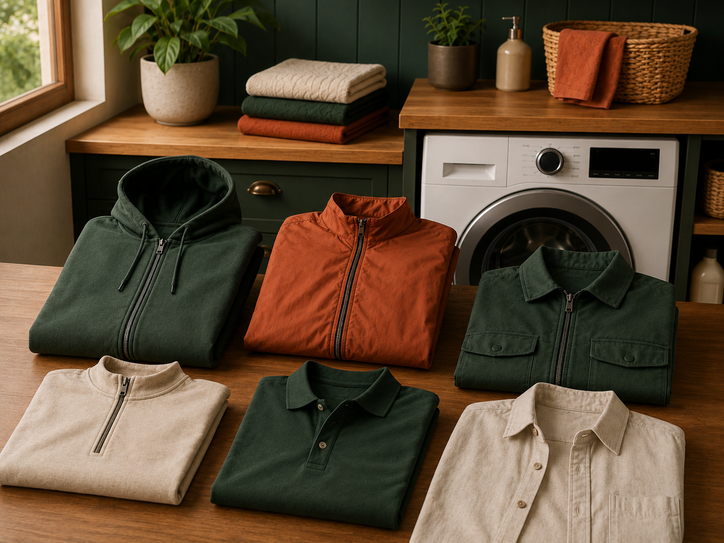
Zip-Up Hoodies
Closing the zipper helps stop the metal or plastic teeth from rubbing against other clothes.
Lightweight Jackets
Zip them fully and check pockets before washing to reduce snagging.
Work Jackets
Close zippers, secure hooks and remove loose items from pockets.
Quarter-Zip Sports Tops
Close the zipper before washing, especially when it has a rigid pull tab.
Polo Shirts
These usually have buttons rather than zippers, so leave the placket unbuttoned unless the care label says otherwise.
Button-Front Shirts
Leave buttons open to reduce stress on buttonholes during agitation.
Printing and Branding
Protect the Zipper and the Decoration
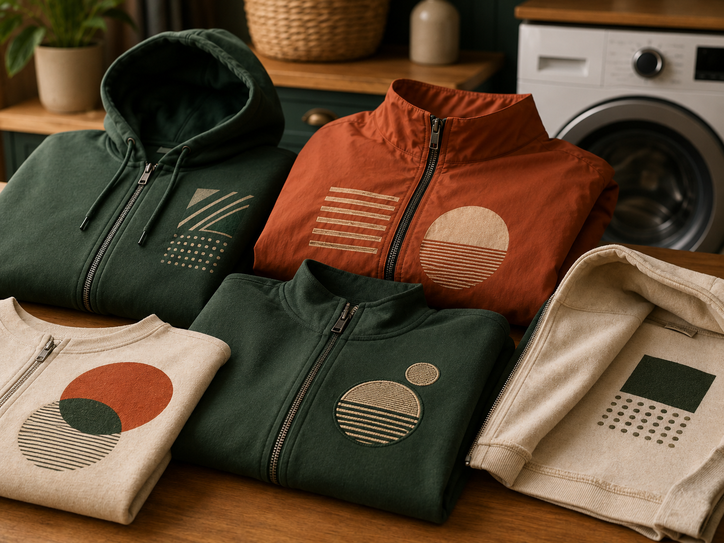
| Branding Method | Washing Concern | Better Care |
|---|---|---|
| DTF Printing | Zipper hardware can rub against the transfer | Zip up and wash inside out when appropriate |
| Silkscreen Printing | Metal pulls can create repeated abrasion | Close the zipper and avoid overloading the washer |
| Sublimation | Hardware can still snag fabric even without a surface print layer | Secure the zipper and follow the polyester care label |
| Embroidery | Zipper pulls can catch loose threads | Close the zipper and wash gently |
Fabric and Hardware
Six Things to Check Before Washing Zipped Clothes
Check the Zipper Teeth
Make sure the zipper closes smoothly before the garment enters the washer.
Check the Pull Tab
Large metal pulls can strike or scratch nearby fabric during agitation.
Turn Inside Out
This can reduce abrasion on outer fabric and printed decoration.
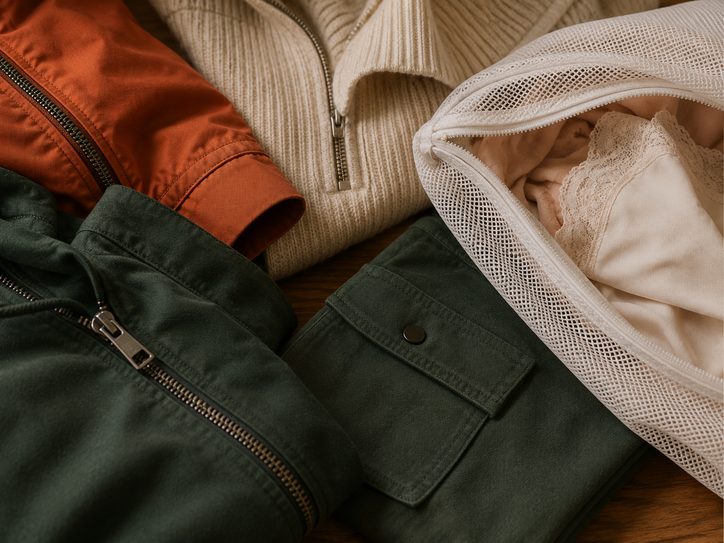
Use a Laundry Bag
A mesh bag can help protect small or delicate zipped garments.
Empty Every Pocket
Coins, keys and tools can cause more damage than the zipper itself.
Read the Care Label
Some garments need gentler washing because of fabric, coating or lining.
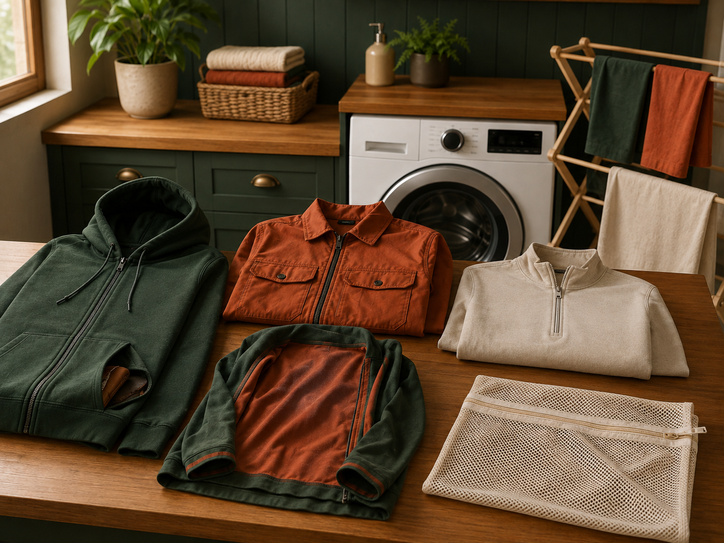
Washing Process
A Simple Routine for Clothes With Zippers
- Empty the pockets. Remove coins, keys, pens and other hard objects.
- Close the zipper fully. Make sure the slider is secure and the teeth are aligned.
- Secure other fasteners. Fasten hooks or rough hook-and-loop closures when appropriate.
- Turn the garment inside out. Do this when the care label and garment design allow it.
- Choose a suitable wash cycle. Match the cycle and water temperature to the fabric and branding.
- Dry according to the label. Avoid unnecessary high heat around plastic zippers or printed areas.
Zip Hoodie
Zip it fully, turn it inside out and wash with similar-weight garments.
Work Jacket
Close all zippers and remove tools or metal objects from pockets first.
Quarter-Zip Sports Top
Close the zipper and use a cooler wash when the care label permits it.
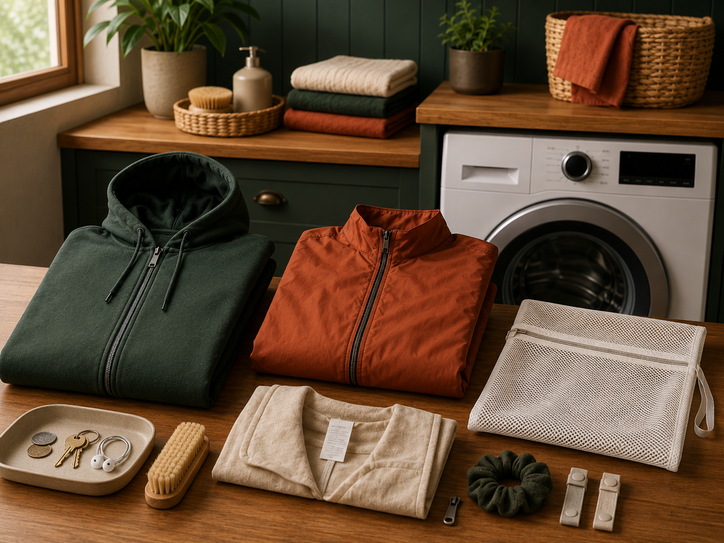
Laundry Checklist
Before Washing Clothes With Zippers
- Empty all pockets
- Close zippers fully
- Secure hooks and rough fasteners
- Leave buttons unbuttoned unless the care label says otherwise
- Turn decorated garments inside out when appropriate
- Use a mesh bag for delicate zipped items if needed
- Do not overload the washing machine
- Follow the garment care label for washing and drying
Should zippers be open or closed in the washing machine?
Usually closed. This reduces snagging and helps keep the zipper teeth aligned during washing.
Should buttons be done up before washing?
Usually no. Leaving buttons open reduces tension on buttonholes and the threads holding the buttons in place.
Can zippers damage other clothes?
Yes. Open zipper teeth and pull tabs can catch or rub against softer fabrics during agitation.
Should zip hoodies be washed inside out?
Often yes, especially when there is printing on the outside, provided the garment care label allows it.
What about plastic zippers?
They should still be closed before washing, and excessive dryer heat should be avoided if the garment is heat-sensitive.
Should velcro-style fasteners be closed?
Yes. Closing them helps stop the rough hook surface from catching on T-shirts, knits or printed fabric.
Choose Practical Garments
Need Jackets, Hoodies or Workwear for Your Team?
Send the intended use, fabric preference, garment style, branding method and wash frequency. Uniform Johor can help compare practical apparel options for regular use.
Related Uniform Johor Articles
Regional Network
Our Other Company Websites
JC Print Malaysia
Main company website for uniforms and printing services.
Visit website →SelangorPrint
Uniform and custom printing support for Selangor buyers.
Visit website →Uniform Penang
Uniform and apparel resources for Penang customers.
Visit website →Uniform Sabah
Uniform and custom apparel resources for Sabah buyers.
Visit website →Uniform Singapore
Uniform and apparel printing information for Singapore.
Visit website →Uniform Hub Singapore
Additional uniform resources for Singapore organisations.
Visit website →Tanah Studio
Apparel and creative services for the Australian market.
Visit website →KitaPrint
Printing support for agents and resellers.
Visit website →