
Compare material/method
Ring-Spun Cotton vs Regular Cotton
Compare softness, yarn construction, print surface, durability and practical use before choosing cotton T-shirts for uniforms, events or merchandise.
Direct answer: ring-spun cotton is made by continuously thinning, twisting and winding cotton fibres into a finer, tighter yarn. This usually gives the finished T-shirt a smoother and softer surface than a basic cotton shirt made with a coarser yarn system. However, “regular cotton” is not one technical yarn category. Manufacturers may use open-end, carded, combed, ring-spun or other yarn constructions, so compare the exact shirt by yarn type, GSM, knit and finishing.
Quick Comparison
Ring-Spun Cotton vs Basic Cotton at a Glance
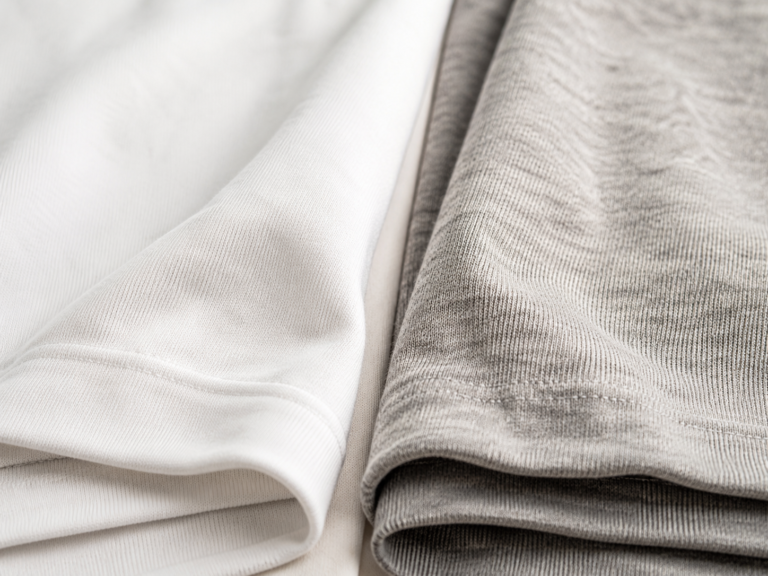
Ring-spun cotton usually feels smoother because the yarn is finer and more tightly twisted. A basic cotton tee may use a coarser yarn that feels more textured and substantial.
| Factor | Ring-Spun Cotton | Basic / Regular Cotton |
|---|---|---|
| Yarn construction | Continuously twisted into a finer, tighter yarn | Varies by manufacturer and may use a coarser yarn system |
| Surface feel | Usually smoother and softer | Can feel more textured or robust |
| Print surface | Often smoother for detailed printing | Can still print well but texture may be more visible |
| Garment feel | Refined and retail-like | Practical and familiar |
| Durability | Can be strong because of tighter yarn twist | Depends on yarn, GSM, knit and construction |
| Best use | Premium uniforms and merchandise | General uniforms, events and everyday use |
Smoother Hand Feel
Finer yarn can create a softer fabric surface against the skin.
Cleaner Print Surface
A smoother knit can help detailed logos and full-colour artwork appear cleaner.
Different Priorities
Softness is only one factor. Work environment, weight and washing frequency also matter.

Uniform Options
Which Cotton Type Fits the Project?
The best cotton shirt depends on whether you are buying for daily staff use, one-time events, retail merchandise or a premium brand experience.
Company Uniforms
Ring-spun cotton can create a more refined feel for office, retail and customer-facing teams.
Events and Campaigns
A practical basic cotton tee may be enough when the main goal is clear branding and coordinated group wear.
Retail Merchandise
Ring-spun cotton is often preferred when buyers expect a soft, smooth, retail-oriented feel.
Oversized T-Shirts
Yarn type matters, but GSM and fit may have an even bigger effect on a structured oversized look.
Daily Staff Wear
Compare softness with washing frequency, workplace heat, garment weight and expected replacement cycle.
Promotional T-Shirts
A simpler cotton construction can be suitable for shorter campaigns or occasional wear.
| Buyer Priority | Starting Direction | Why |
|---|---|---|
| Soft premium feel | Ring-spun cotton | Finer, smoother yarn surface |
| General event use | Either | Choose by desired feel and project needs |
| Detailed print | Ring-spun cotton | Smoother surface can support cleaner artwork |
| Heavy oversized look | Check GSM first | Weight and knit strongly affect drape |
| Daily work uniform | Compare both | Comfort, durability and washing needs should be tested |
Custom Branding
How Cotton Yarn Affects Shirt Printing
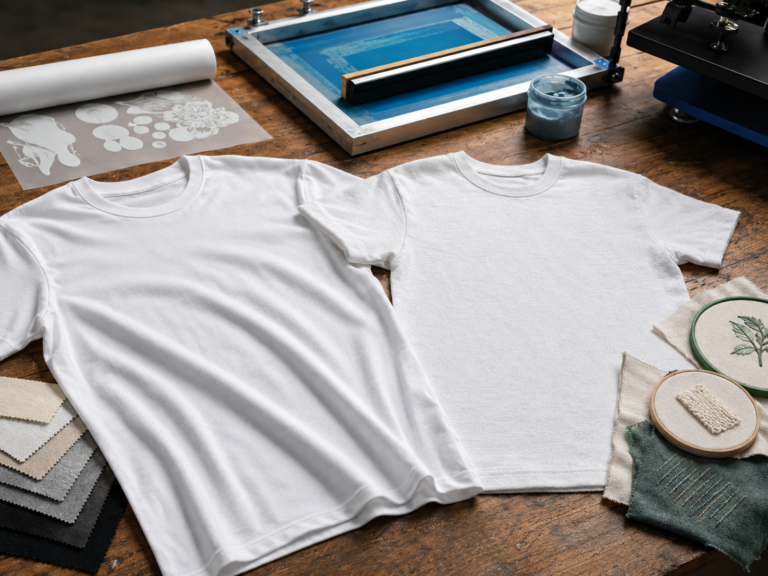
Printing quality depends on artwork, ink, heat, pressure and fabric surface. Ring-spun cotton often gives printers a smoother surface to work with, but basic cotton shirts can still produce strong results when the garment is suitable.
DTF Printing
Works on both shirt types. A smoother ring-spun surface can help the finished transfer look refined around edges.
Silkscreen Printing
Both can work well. Fine yarns and smoother surfaces may help when artwork includes smaller details.
Embroidery
Fabric weight and stability matter more than yarn type. Thin cotton should be tested before dense embroidery.
| Branding Goal | Ring-Spun Cotton | Basic Cotton |
|---|---|---|
| Detailed full-colour logo | Very good starting surface | Good, depending on texture |
| One-colour silkscreen | Excellent | Excellent |
| Large front print | Usually smoother beneath the print | Fabric texture may show more |
| Small embroidery | Check GSM and backing | Check GSM and backing |
- Do not choose a shirt for printing based on yarn name alone.
- Do not assume every ring-spun shirt has the same GSM or quality.
- Do not use dense embroidery on thin cotton without testing.
- Do not compare print quality without checking the exact shirt surface.
Material, Colour and Design
Yarn Type Is Only One Part of Cotton Quality
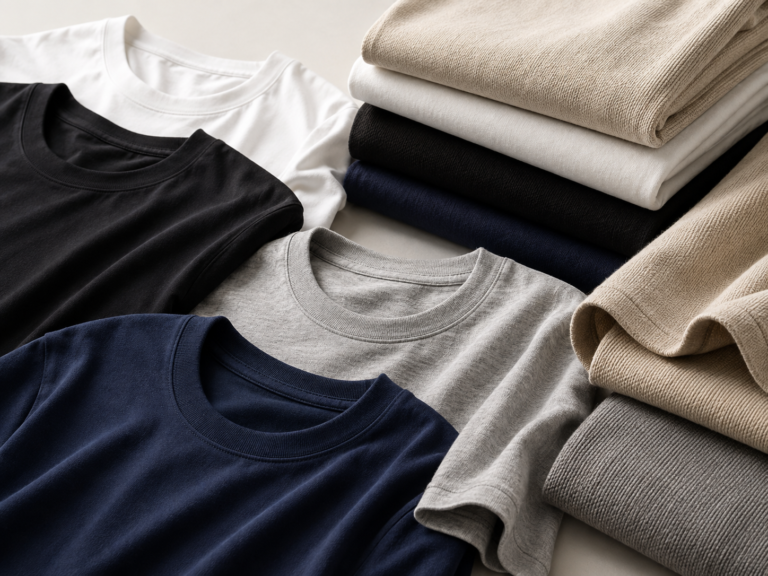
Ring-spun describes how the yarn is made. It does not automatically tell you whether the cotton is combed, the GSM, the knit structure or the finishing. Those factors can change the shirt just as much.
Combed Cotton
Combing removes shorter fibres and impurities before spinning. A shirt can be both combed and ring-spun.
Fabric Weight
A 150GSM ring-spun tee and a 220GSM ring-spun tee can feel very different despite the same yarn process.
Knit Structure
Single jersey, interlock and other knits affect stretch, opacity, drape and surface stability.
Light Colours
White and pale shirts should be checked for opacity regardless of whether they use ring-spun yarn.
Fabric Finishing
Enzyme washing, silicone finishing and other treatments can change softness after spinning.
Garment Fit
Regular, slim and oversized cuts influence comfort and drape independently from yarn type.
| Specification | What It Tells You |
|---|---|
| Ring-spun | How the yarn is spun |
| Combed | That shorter fibres were removed during fibre preparation |
| 100% cotton | The fibre content, not the yarn quality by itself |
| 180GSM | The fabric weight per square metre |
| Single jersey | The knit construction |

Buying Process
How to Compare Cotton Shirts Before Ordering
- Check the yarn description. Look for ring-spun, combed, carded or open-end.
- Compare the GSM. Fabric weight affects opacity, drape and heat feel independently from yarn type.
- Touch the actual fabric. Compare softness and smoothness rather than relying only on catalogue wording.
- Review the print method. Detailed DTF or silkscreen artwork may benefit from a smoother surface.
- Check the size chart. A premium yarn does not help if the garment fit is unsuitable for the team.
- Keep the final model code. Record the exact shirt model so future reorders use the same construction.
Premium Staff Uniform
Ring-spun cotton is a strong starting choice when hand feel and customer-facing presentation matter.
One-Off Event Shirt
A more basic cotton shirt can still work well when comfort and clear event branding are the main needs.
Retail Merchandise
Ring-spun or combed ring-spun cotton often better matches the softer feel expected from branded merchandise.
Buyer Checklist
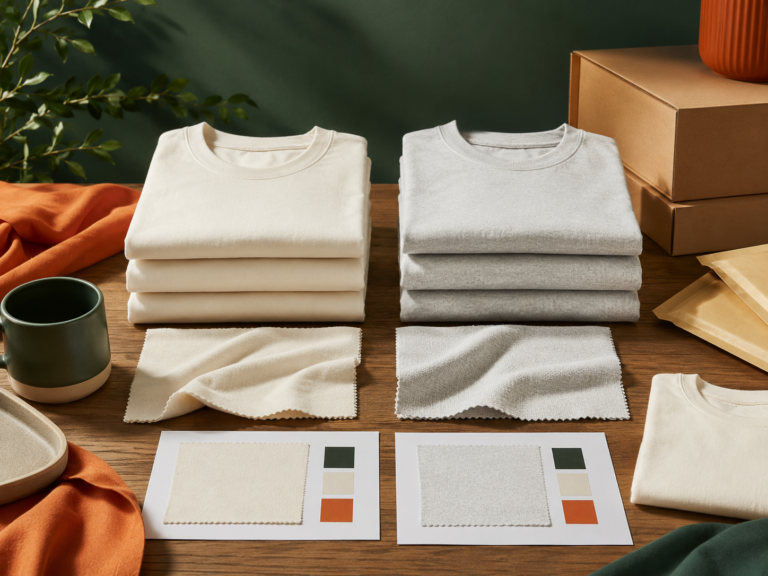
Before Choosing a Cotton T-Shirt
- Check whether the yarn is ring-spun, combed, carded or open-end
- Confirm whether the fabric is 100% cotton or a blend
- Compare GSM
- Feel the actual fabric surface
- Check opacity in the selected colour
- Review the printing or embroidery method
- Check the size chart and fit
- Record the exact shirt model for reorders
What is ring-spun cotton?
It is cotton yarn made by continuously drawing and twisting fibres into a finer, tighter yarn before knitting.
Is ring-spun cotton softer?
Usually yes. The finer, smoother yarn often creates a softer hand feel than a coarser basic cotton yarn.
Is ring-spun cotton stronger?
Tighter yarn twist can improve yarn strength, but total shirt durability also depends on fibre quality, GSM, knit and garment construction.
Is ring-spun the same as combed cotton?
No. Ring spinning describes how yarn is spun, while combing describes fibre preparation. A shirt can be both combed and ring-spun.
Does ring-spun cotton print better?
Its smoother surface can help detailed prints look cleaner, but print quality also depends on artwork, ink, transfer settings and finishing.
Is regular cotton always open-end cotton?
No. “Regular cotton” is informal wording and can refer to many constructions. Check the actual yarn specification.
Which is better for company uniforms?
Ring-spun cotton is attractive when softness and a refined appearance matter. Basic cotton can still be practical for general uniforms and events.
Choose the Right Cotton Shirt
Need Help Comparing Cotton T-Shirts?
Send the intended use, quantity, preferred GSM, shirt style, colours, size range and artwork. Uniform Johor can help compare suitable cotton T-shirt options for your project.
Related Uniform Johor Articles
Regional Network
Our Other Company Websites
Explore related uniform, apparel and printing websites within the same company or regional business network.
JC Print Malaysia
Main company website for uniforms and printing services.
Visit website →SelangorPrint
Uniform and custom printing support for Selangor buyers.
Visit website →Uniform Penang
Uniform and apparel resources for Penang customers.
Visit website →Uniform Sabah
Uniform and custom apparel resources for Sabah buyers.
Visit website →Uniform Singapore
Uniform and apparel printing information for Singapore.
Visit website →Uniform Hub Singapore
Additional uniform resources for Singapore organisations.
Visit website →Tanah Studio
Apparel and creative services for the Australian market.
Visit website →KitaPrint
Printing support for agents and resellers.
Visit website →