
Uniform Brand Johor
How to Store Damp Shirts After Outdoor Work
Learn what to do with sweaty or rain-damp work shirts when you cannot wash them immediately after an outdoor shift.
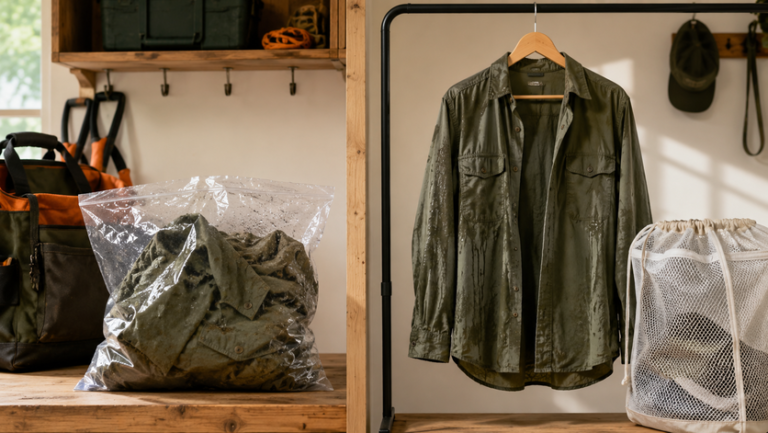
Direct answer: do not fold, roll or seal a damp work shirt inside a plastic bag, backpack or closed locker for longer than necessary. Remove it from the body, shake it open and hang or drape it somewhere with airflow until it can be washed. If the shirt must be transported, keep wet clothing separate from clean items and use a breathable laundry bag or a container that is opened as soon as you reach a suitable place. Wash the shirt promptly and dry it completely before long-term storage or reuse.
Quick Comparison
Better and Worse Ways to Store a Damp Shirt
| Situation | Better Choice | Avoid | Why |
|---|---|---|---|
| Immediately after work | Hang or spread the shirt open | Rolling it tightly into a bag | Airflow helps moisture escape |
| Transport home | Use a breathable laundry bag where practical | Sealing it with clean clothes | Keeps damp items separate while reducing trapped moisture |
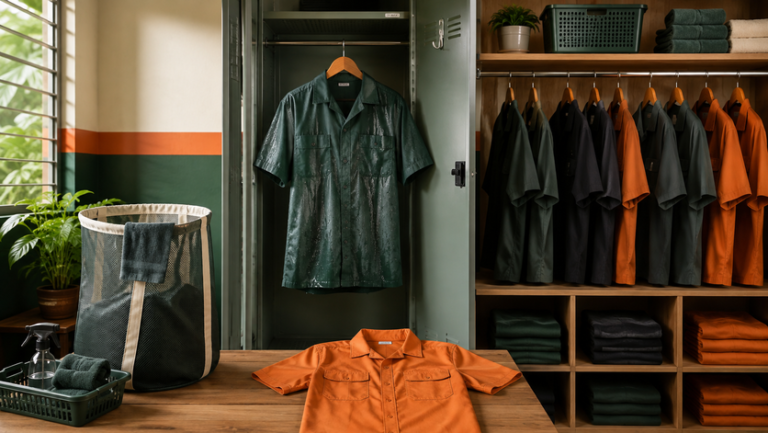
| In a locker | Hang it loosely with ventilation | Leaving it crumpled on a shelf | Exposed fabric dries more evenly |
| Overnight | Wash and fully dry it | Leaving it damp until the next shift | Repeated damp storage encourages musty smells |
| After rain exposure | Remove heavy surface water and air the garment | Storing it wet inside a closed car or bag | Thick seams and collars can stay wet longer |
Open the Shirt Out
More exposed fabric means more opportunity for moisture to leave.
Separate Damp Laundry
Keep wet workwear away from clean clothes, paperwork and electronics.
Wash Promptly
Temporary airing is useful, but it is not a replacement for proper laundering.

Work Shirt Options
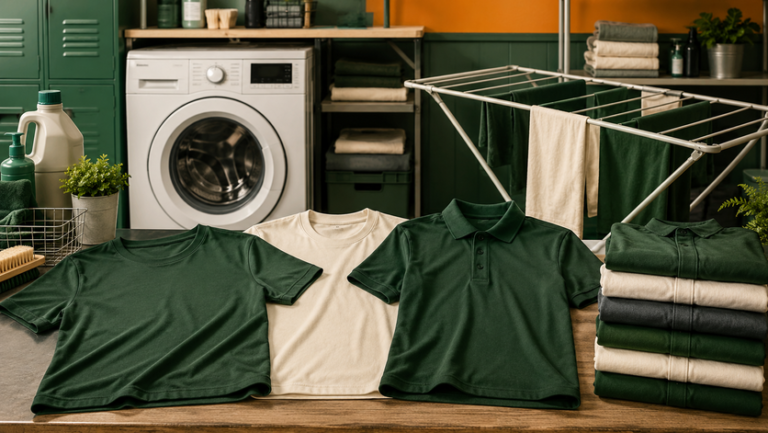
Some Fabrics Are Easier to Manage After Outdoor Work
Microfiber Quick-Dry
Holds relatively little water and is practical for staff who sweat heavily or work in humid conditions.
Eyelet Performance Fabric
Open-knit construction can help airflow during wear and during airing.
Cotton T-Shirts
Soft and familiar, but they can absorb more moisture and may remain damp longer after heavy sweating.
Cotton-Polyester Blends
A middle option for teams that want a cotton-like feel with somewhat easier drying.
Performance Polos
Useful for outdoor customer-facing roles that still need a collared uniform.
Long-Sleeve Work Shirts
Cuffs, plackets, collars and double-layer areas should be opened out carefully when damp.
| Fabric Direction | After-Work Storage Need | Useful Habit |
|---|---|---|
| Quick-dry polyester | Usually dries faster | Hang openly until wash time |
| Eyelet polyester | Good airflow potential | Keep the knit fully spread out |
| Cotton | Can remain wet longer | Do not bunch or layer while damp |
| Heavy polo or jacket | Thicker sections may stay wet | Check collars, cuffs and seams before storage |
Printing and Branding
Storage Habits Should Protect the Decoration Too
DTF Printing
Do not leave the printed area folded tightly against itself while wet for long periods. Air the shirt open before washing.
Silkscreen Printing
Keep the shirt open so wet fabric does not remain compressed around the printed surface.
Embroidery
Embroidered areas can be thicker, so check that the backing and stitched section are fully dry before storage.
| Decoration | Temporary Storage Habit | Avoid |
|---|---|---|
| DTF | Hang or drape open | Wet print folded against itself |
| Silkscreen | Keep the shirt loosely open | Tight compression while damp |
| Embroidery | Dry stitched and backing areas thoroughly | Folding thick wet sections together |
| Sublimation | Air the polyester garment normally | High heat used as a quick drying shortcut |
- Do not place a wet printed shirt directly into long-term storage.
- Do not use strong heat on decorated areas just to dry them faster.
- Do not leave wet embroidery backing folded inside the shirt.
- Do not use a sealed plastic bag as a long-term damp-clothing solution.

Material, Colour and Design
Fabric Construction Changes Drying Time
Fibre Type
Cotton generally holds more water than many performance polyester fabrics.
Fabric Weight
Heavier fabrics and double-layer areas can take longer to dry fully.
Knit Openness
Eyelet and more open structures can allow better airflow around the fabric.
Collars and Plackets
Layered sections can remain damp even when the shirt body feels nearly dry.
Dark Colours
Colour does not remove moisture, so a dark shirt still needs full drying before storage.
Garment Shape
Open the sleeves, collar and body instead of leaving the shirt folded in on itself.

After-Work Routine
What to Do From the End of Shift to the Next Wear
- Remove the damp shirt promptly. Change into a clean shirt where workplace rules and facilities allow.
- Shake it open. Separate the sleeves, collar and body so wet fabric is not trapped together.
- Give it airflow. Hang or drape the shirt in a ventilated area until transport or washing.
- Transport it separately. Use a breathable laundry bag where practical and keep damp workwear away from clean items.
- Wash as soon as practical. Temporary airing should not become long-term storage.
- Dry fully before the next shift. Only fold, stack or return the shirt to the locker when every section is dry.
Construction or Site Work
Keep damp shirts separate from safety gear, documents and clean clothing.
Rain-Soaked Uniform
Remove excess water, open the garment fully and pay attention to thick seams and collars.
Back-to-Back Shifts
Keep spare shirts available so staff do not need to reuse clothing that is still damp.
Storage Checklist
Before Leaving a Damp Shirt Until Wash Time
- Take the shirt out of any sealed bag
- Shake the garment open
- Hang or drape it with airflow
- Keep damp workwear separate from clean clothing
- Use breathable temporary transport where practical
- Wash the shirt as soon as practical
- Dry collars, seams and underarms completely
- Store only when the whole garment is fully dry
Can I keep a damp shirt in a plastic bag?
Only for very short transport when necessary. Open the bag and remove the shirt as soon as possible so moisture is not trapped.
What if I cannot wash the shirt immediately?
Air it out first. Hang or spread it open in a ventilated place, then wash it as soon as practical.
Should I leave a damp shirt in my locker?
Avoid leaving it crumpled in a closed locker. If a locker must be used temporarily, hang the shirt loosely and allow ventilation.
Is a breathable laundry bag better?
It can be a better temporary transport option than a fully sealed plastic bag because it allows more airflow.
Does quick-dry fabric still need to be aired out?
Yes. Quick-dry fabric can release moisture faster, but it still needs airflow and should be fully dry before storage.
What parts of a work shirt stay damp longest?
Collars, underarms, cuffs, plackets, seams and embroidered areas can remain damp after the main body feels dry.
Plan Better Outdoor Uniforms
Need Easier-Drying Shirts for Outdoor Work?
Send the staff role, work environment, preferred shirt style, quantity, size range and branding method. Uniform Johor can help compare practical shirts for hot, humid and outdoor work.
Related Uniform Johor Articles
Regional Network
Our Other Company Websites
JC Print Malaysia
Main company website for uniforms and printing services.
Visit website →SelangorPrint
Uniform and custom printing support for Selangor buyers.
Visit website →Uniform Penang
Uniform and apparel resources for Penang customers.
Visit website →Uniform Sabah
Uniform and custom apparel resources for Sabah buyers.
Visit website →Uniform Singapore
Uniform and apparel printing information for Singapore.
Visit website →Uniform Hub Singapore
Additional uniform resources for Singapore organisations.
Visit website →Tanah Studio
Apparel and creative services for the Australian market.
Visit website →KitaPrint
Printing support for agents and resellers.
Visit website →