
Uniform Brand Johor
How to Remove Deodorant Stains From Shirts
Deodorant marks are easier to remove when they are treated early, before repeated washing and high-heat drying set the residue deeper.
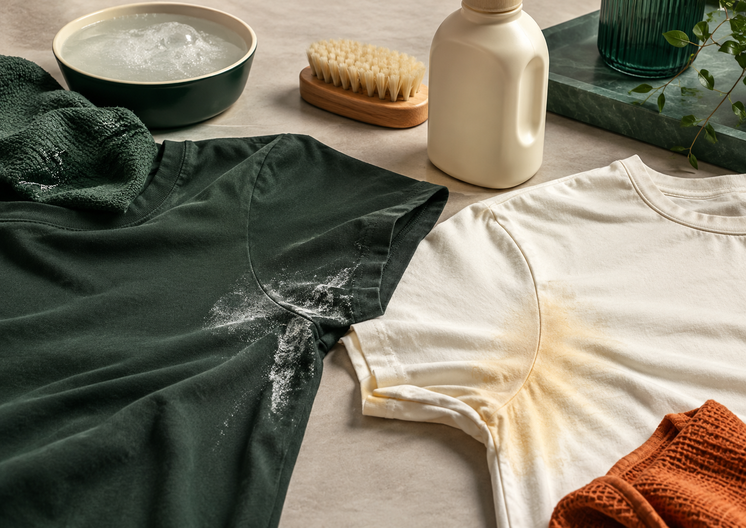
Direct answer: first check the care label. Fresh white deodorant marks can often be lifted with a damp cloth or gentle fabric-on-fabric rubbing. Older yellow or stiff underarm stains usually need a suitable laundry pre-treatment or detergent worked gently into the area before washing. Avoid aggressive scrubbing, unsuitable chlorine bleach and high dryer heat until the stain has been removed.
Quick Comparison
Different Deodorant Stains Need Different Treatment
| Stain Type | What It Looks Like | Better Starting Point |
|---|---|---|
| Fresh white marks | Powdery or chalky streaks on dark fabric | Gently rub with a damp cloth or clean fabric |
| Yellow underarm stains | Discolouration that builds up over time | Pre-treat before washing |
| Stiff underarm residue | Waxy or hardened fabric around the armpit | Work detergent or stain treatment into the area gently |
| Dark-shirt residue | White lines or smears after dressing | Remove the residue before washing if possible |
| Repeated old stains | Colour and texture changes after many wears | Repeat gentle pre-treatment instead of harsh scrubbing |
Fabric and Shirt Type
Fabric Type Changes How You Should Treat the Stain
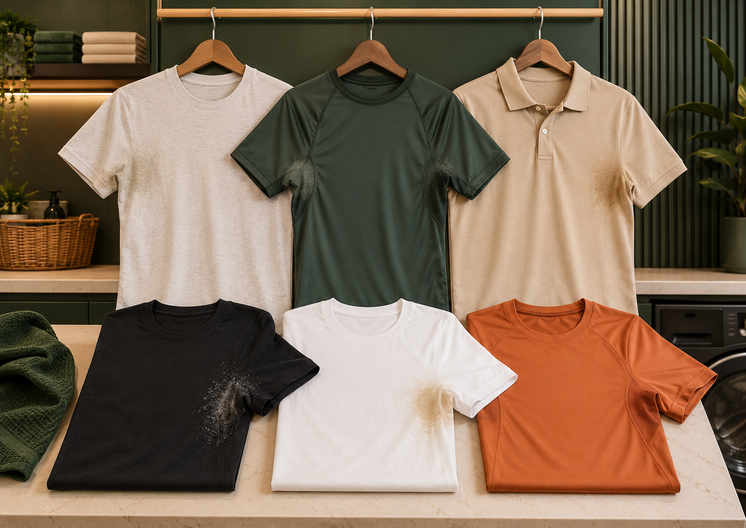
Cotton T-Shirts
Cotton can hold sweat and deodorant residue, so pre-treatment before washing is often useful.
Quick-Dry Shirts
Synthetic sports fabric can hold body oils, so use a treatment suitable for polyester and avoid unnecessary heat.
Cotton-Poly Blends
Follow the finished garment care label instead of assuming the shirt behaves exactly like cotton.
Dark Shirts
Fresh white deodorant marks are often easier to remove than deep underarm buildup.
White Shirts
Yellowing is more visible, but chlorine bleach is not automatically suitable for every white garment.
Stretch Sports Shirts
Be cautious with strong bleach and high heat on garments containing elastane or spandex.
Printing and Branding
Protect the Print While Treating the Underarm
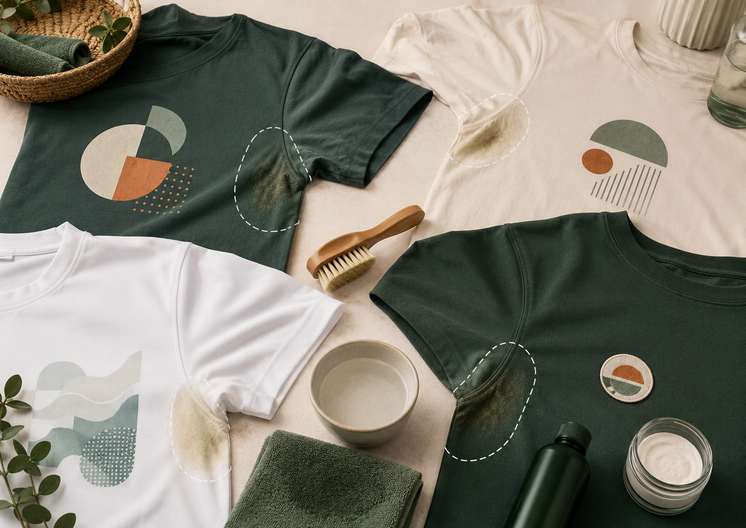
| Branding Method | Stain-Treatment Concern | Better Approach |
|---|---|---|
| DTF Printing | Harsh rubbing or strong chemicals can stress the transfer | Keep aggressive stain treatment away from the printed area |
| Silkscreen Printing | Repeated bleach exposure can affect ink colour | Spot-treat the underarm carefully and follow the care label |
| Sublimation | The polyester garment still needs suitable stain care | Use a treatment compatible with the fabric |
| Embroidery | Thread colours may react differently from the shirt fabric | Avoid soaking embroidered areas in harsh treatment unnecessarily |
Stain Care
Six Ways to Handle Deodorant Stains More Safely
Treat Fresh Marks Early
Fresh residue is usually easier to remove than buildup that has been washed and dried repeatedly.
Test First
Test uncertain stain removers on a hidden area before treating the visible underarm section.
Use Gentle Friction
Work the treatment into the fabric without aggressive scrubbing that can roughen fibres.
Allow Treatment Time
Follow the stain-remover or detergent instructions instead of rinsing it off immediately.
Do Not Assume Bleach
Chlorine bleach can damage colour, stretch fibres and some prints, so only use it when permitted.
Check Before Drying
If the stain remains, repeat treatment before exposing the shirt to high dryer heat.
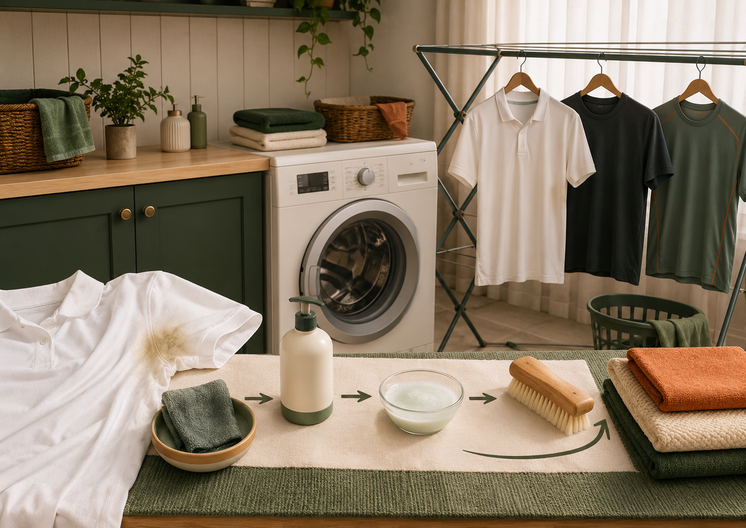
Cleaning Process
A Simple Deodorant Stain Removal Routine
- Check the care label. Confirm fabric, wash temperature and bleach restrictions.
- Identify the stain. Fresh white residue needs less treatment than old yellow buildup.
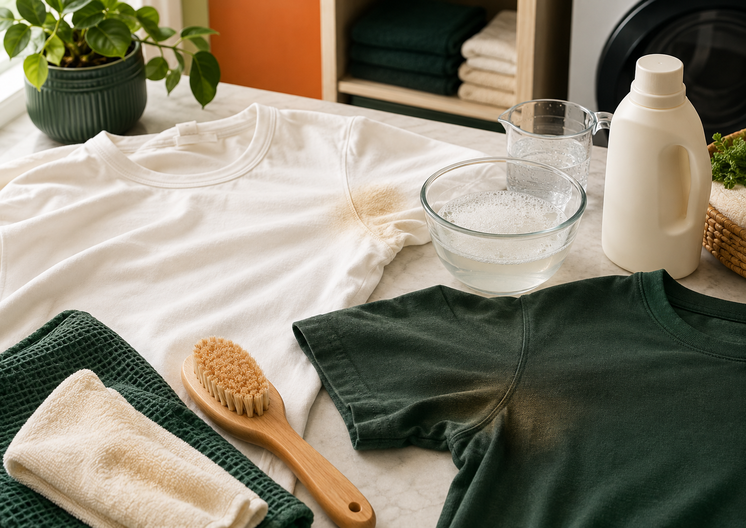
- Pre-treat the underarm. Use a suitable detergent or stain remover according to its directions.
- Work gently. Use light rubbing or a soft brush where the fabric allows it.
- Wash normally. Use the cycle and temperature recommended for the shirt.
- Inspect before high-heat drying. If the stain remains, repeat treatment first.
White Office Polo
Treat yellow underarm buildup before it becomes a repeated wash-and-dry stain.
Dark Event T-Shirt
Remove fresh chalky marks gently before they spread across the shirt.
Quick-Dry Sports Shirt
Use a synthetic-fabric-friendly stain treatment and avoid unnecessary high heat.
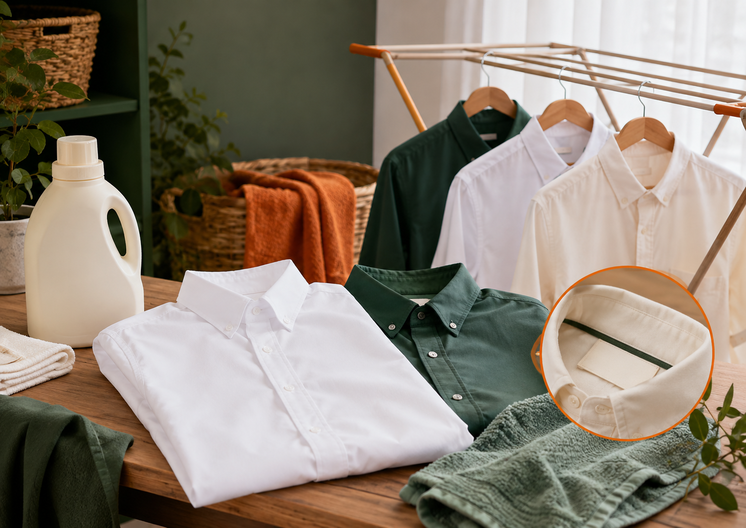
Laundry Checklist
Before Treating Deodorant Stains
- Read the garment care label
- Identify whether the stain is fresh or old
- Test uncertain stain removers first
- Pre-treat before washing
- Use gentle rubbing instead of aggressive scrubbing
- Avoid chlorine bleach unless the garment allows it
- Protect printed and embroidered areas
- Check the stain before high-heat drying
Why do deodorant stains turn yellow?
Yellowing can build up from repeated contact between sweat, body oils, deodorant ingredients and the fabric over time.
How do I remove fresh white deodorant marks?
Try gently rubbing the mark with a damp cloth or clean fabric before using a stronger stain treatment.
Can I use bleach on deodorant stains?
Not automatically. Chlorine bleach can damage colour, stretch fibres and some decorations, so check the care label first.
Why does the underarm area become stiff?
Repeated buildup of deodorant, sweat, body oils and detergent residue can make the fabric feel stiff.
Should I dry the shirt if the stain is still visible?
It is better to inspect and re-treat first because high heat can make some stains more difficult to remove later.
Can deodorant stain treatment damage shirt prints?
Aggressive chemicals or scrubbing can damage nearby printed or embroidered branding, so spot-treat carefully.
Choose Practical Shirts
Need Shirts for Daily Staff or Sports Use?
Send the intended use, fabric preference, shirt colour, branding method and wash frequency. Uniform Johor can help compare shirt options for regular wear and washing.
Related Uniform Johor Articles
Regional Network
Our Other Company Websites
JC Print Malaysia
Main company website for uniforms and printing services.
Visit website →SelangorPrint
Uniform and custom printing support for Selangor buyers.
Visit website →Uniform Penang
Uniform and apparel resources for Penang customers.
Visit website →Uniform Sabah
Uniform and custom apparel resources for Sabah buyers.
Visit website →Uniform Singapore
Uniform and apparel printing information for Singapore.
Visit website →Uniform Hub Singapore
Additional uniform resources for Singapore organisations.
Visit website →Tanah Studio
Apparel and creative services for the Australian market.
Visit website →KitaPrint
Printing support for agents and resellers.
Visit website →