
DTF vs Sublimation vs Silk Screen: Which Should You Choose?
A practical comparison for purchasing managers, printing agents, factories, corporate offices, schools, event organisers and sports teams choosing an apparel customisation method.
DTF, sublimation and silk screen printing can all produce effective customised apparel, but they solve different problems. There is no universal winner.
DTF is often the first option to assess for detailed multicolour artwork, personal names and mixed garment orders. Sublimation is generally more suitable for suitable polyester sportswear and full-colour jersey designs. Silk screen printing is often practical when the same artwork is repeated across a larger quantity, particularly when the design uses fewer colours.
The correct choice depends on the garment, artwork, quantity, personalisation, intended use and production arrangement.
Uniform Johor offers these methods through its apparel customisation services .
Direct Answer Summary
You need detailed graphics, gradients, several colours, individual names or different artwork versions on compatible garments.
You need broad colour coverage, patterns, names and numbers on suitable polyester sports jerseys or teamwear.
A larger quantity uses the same design and the artwork is suitable for screen preparation and colour separation.
A corporate polo needs a compact stitched logo. Embroidery may be more suitable than any of these three options.
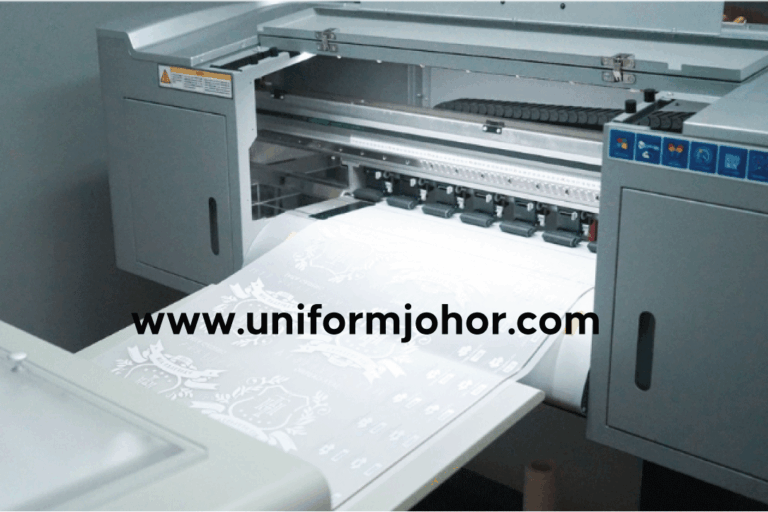
Detailed DTF, Sublimation and Silk Screen Comparison
| Factor | DTF Printing | Sublimation Printing | Silk Screen Printing |
|---|---|---|---|
| Suitable order size | Often practical for smaller, medium or mixed orders | Can support small or larger runs depending on garment construction | Often more practical for repeated larger runs |
| Artwork complexity | Strong for detail, gradients and multicolour graphics | Strong for patterns, gradients and full-colour jersey designs | Best when artwork can be separated into printable colour layers |
| Number of colours | Several colours can be included without one physical screen per colour | Supports extensive colour within the digital design | Each colour normally affects screen setup and registration |
| Fabric compatibility | Can suit a broad range of compatible garments | Primarily suited to suitable polyester-based materials | Can suit several materials with the correct ink and setup |
| Garment colour | Can be considered for light and dark garments | Generally strongest on white or light suitable polyester | Can be used on light or dark garments, subject to ink setup |
| Print appearance | Sharp, detailed, surface-applied graphic | Colour becomes part of the suitable polyester material | Solid ink appearance depending on artwork and ink coverage |
| Texture | A surface layer can usually be felt | Usually little or no separate surface feel | Surface feel varies with ink and coverage |
| Personalisation | Suitable for names, numbers and artwork variations | Suitable for names and numbers integrated into jersey artwork | Less convenient when every garment needs different content |
| Repeat-order consistency | Record transfer size, placement and artwork version | Record garment pattern, artwork file and production arrangement | Record screen details, ink colours and placement |
| Setup requirements | Digital file, transfer preparation and heat application | Digital artwork, suitable substrate and heat-transfer workflow | Colour separation, screens, registration, printing and curing |
| Common applications | Event shirts, detailed logos, names and promotional apparel | Sports jerseys, teamwear and full-colour polyester apparel | Factory shirts, school events, campaigns and repeated designs |
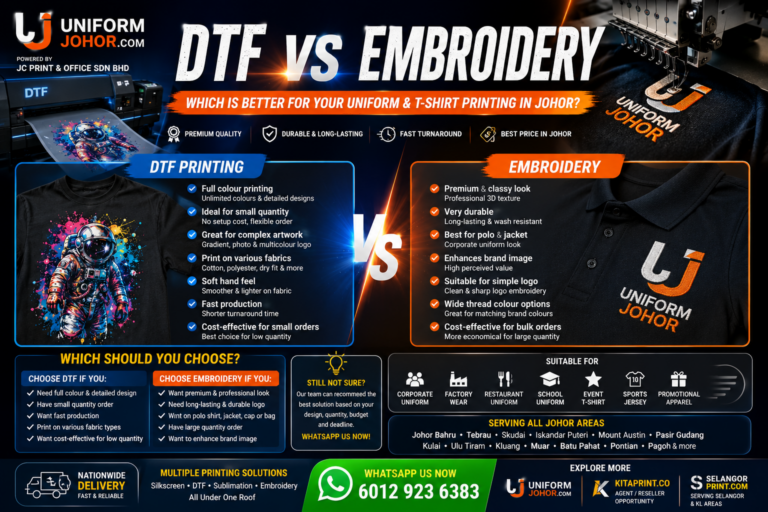
Understanding DTF Printing
DTF, or direct-to-film printing, creates a transfer that is applied to the garment using heat and pressure.
It is especially useful when the artwork contains:
- Gradients
- Fine lines
- Several colours
- Detailed illustrations
- Small lettering
- Individual names
- Staff or player numbers
- Different versions of the same design
Where DTF Performs Well
DTF can be practical for company T-shirts, event apparel, promotional garments, club shirts and orders containing different names or numbers. It may also allow similar artwork to be used on several compatible garment categories, subject to production confirmation.
DTF Trade-Offs
A DTF transfer sits on the garment surface. A compact chest logo and a large full-back graphic will not feel the same. Large, solid coverage may feel heavier or more noticeable during wear.
DTF results also depend on transfer preparation, heat application, garment compatibility, artwork quality and correct care after production.
Do not choose DTF only because the artwork has many colours. Print coverage, garment comfort and intended use still matter.
Understanding Sublimation Printing
Sublimation is a digital process mainly used for suitable polyester-based apparel. Under heat, the colour is transferred into the material rather than forming a separate film-like layer on top.
Where Sublimation Performs Well
- Team jerseys
- School sports shirts
- Running apparel
- Tournament uniforms
- Esports jerseys
- Full-colour corporate sportswear
- Apparel with patterns across several panels
A single design can include a background pattern, sponsor marks, player name, number and team colours.
The Uniform Johor guide explaining how sublimation printing works provides more background.
Sublimation Trade-Offs
Sublimation is not the default choice for ordinary cotton shirts. It is generally most relevant to suitable polyester-based garments and often works most effectively on white or light-coloured materials.
Buyers should also confirm whether the job uses a ready-made polyester shirt, selected print positions or a fully designed cut-and-sew jersey. These arrangements involve different production requirements.
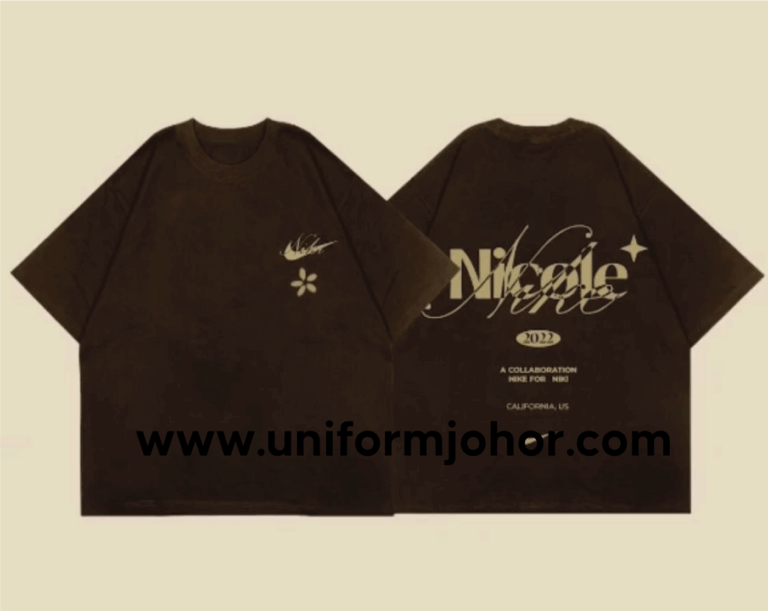
Understanding Silk Screen Printing
Silk screen printing, also called screen printing or silkscreen printing, pushes ink through a prepared mesh screen onto the garment. A separate production stage is normally required for each artwork colour.
Where Silk Screen Performs Well
- The same design is repeated across many garments
- The artwork uses a limited number of colours
- The garment type remains consistent
- Personal names are not required on every piece
- The buyer needs strong, solid-colour branding
- The same design may be reordered later
Typical applications include factory shirts, campaign T-shirts, school event shirts, volunteer apparel and larger promotional orders.
Uniform Johor also has a guide explaining what silk screen printing is .
Silk Screen Trade-Offs
Initial setup may be less practical for a very small order or for an order containing many artwork changes. Each additional colour, print position or garment variation can affect production preparation.
If every shirt requires a different staff name, DTF may be more practical for the variable portion of the artwork.
Which Method Is Better for Durability?
No responsible supplier should claim that one method always lasts longer than every other method.
Durability depends on:
- Fabric and garment construction
- Ink or transfer system
- Production preparation
- Curing or heat application
- Artwork size and coverage
- How the garment is used
- Washing and drying procedures
- Exposure to friction, heat or chemicals
Ask for garment-specific care guidance instead of relying on a general claim such as “this printing lasts forever.”
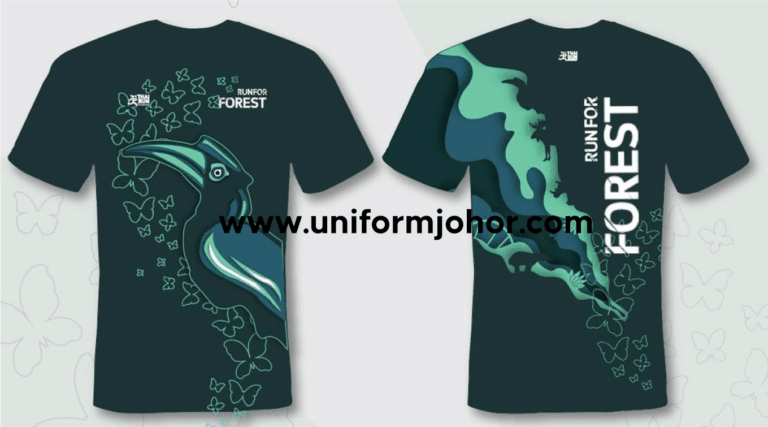
Best Option by Order Scenario
Start by Evaluating DTF
It can manage detailed colour without preparing several physical screens. Garment type, print size and texture must still be checked.
Start by Evaluating Sublimation
It is particularly relevant when the design covers much of a suitable polyester jersey and includes names, numbers and patterns.
Start by Evaluating Silk Screen
Repeated limited-colour artwork can make the screen preparation more practical across the run.
Evaluate DTF or Sublimation
DTF can handle variable names on ready-made garments. Sublimation can integrate personalisation into jersey artwork.
Consider Embroidery
None of the three methods is automatically the first choice for a compact corporate polo logo.
See the DTF versus embroidery guide .
Compare DTF and Silk Screen
DTF may suit complex colour; silk screen may suit simplified repeated artwork. Total coverage and comfort should be reviewed.
Recommendations by Buyer Type
Printing Agents and Resellers
Review the end customer’s artwork and garment before choosing a method. DTF may help with mixed designs, silk screen with repeated volume and sublimation with custom jerseys.
Agents may also visit KitaPrint , part of the same printing business network.
Factories
Silk screen may suit repeated production shirts. DTF may suit department batches or detailed identification. Sublimation is more relevant to sports days and team activities.
Corporate Offices
DTF can support colourful event shirts. Silk screen can support repeated promotional apparel. Sublimation is more relevant to corporate sportswear than formal office uniforms.
Schools
DTF can suit club shirts, silk screen repeated event shirts and sublimation house or sports jerseys. One authorised person should approve all artwork and names.
Events
DTF may suit detailed multicolour designs, silk screen repeated simple artwork and sublimation polyester sports or teamwear.
Sports Teams
Sublimation is normally the first option to assess for full-colour suitable polyester jerseys. DTF can still suit selected logos, names or numbers on ready-made sports garments.
Budget and Setup Considerations
DTF Budget Factors
- Transfer dimensions
- Number of print positions
- Variable names or designs
- Garment type
- Total quantity
Sublimation Budget Factors
- Ready-made garment versus cut-and-sew construction
- Fabric type
- Artwork coverage
- Number of personalised jerseys
- Pattern and panel complexity
Silk Screen Budget Factors
- Number of artwork colours
- Number of screens
- Front, back and sleeve positions
- Total quantity
- Garment colour
- Whether an underbase is required
Buyer Decision Checklist
- Confirm the garment material.
- Confirm whether the garment is light or dark.
- Identify ready-made or custom cut-and-sew production.
- Confirm the total quantity.
- Check whether every garment uses the same artwork.
- Count the artwork colours.
- Identify gradients or photographic details.
- List individual names and numbers.
- Confirm every print size and position.
- Decide whether surface texture is acceptable.
- Confirm office, factory, event or sports use.
- Plan for possible repeat orders.
- Approve one final artwork version.
- Request care guidance.
- Ensure the quotation identifies the selected method.
Frequently Asked Questions
Is DTF better than silk screen printing?
DTF may be more practical for detailed, multicolour or personalised artwork. Silk screen may be more suitable when the same simpler design is repeated across a larger quantity.
Is sublimation suitable for cotton T-shirts?
Conventional sublimation is mainly intended for suitable polyester-based materials. Cotton apparel usually requires a different arrangement.
Which method has the softest feel?
Sublimation generally adds little or no separate surface layer on suitable polyester. DTF and silk screen create surface-applied decoration, but the feel varies with artwork size and coverage.
Can all three methods print full-colour artwork?
DTF and sublimation are usually the more direct choices for complex full-colour designs. Silk screen can reproduce multicolour work, but every colour adds preparation.
Which method is best for individual names and numbers?
DTF is often practical for variable names on ready-made garments. Sublimation is suitable when names and numbers are integrated into custom polyester jersey artwork.
Which method is suitable for a large company event?
Silk screen may suit repeated limited-colour designs, DTF may suit detailed multicolour artwork and sublimation may suit polyester sports or teamwear.
How do I obtain a recommendation?
Send the garment type, product code, colour, quantity, artwork, printing positions, personalisation list and required receiving date through the Uniform Johor quotation page .
Request a Printing Recommendation
Uniform Johor can review your garment, artwork, quantity and personalisation requirements before recommending DTF, sublimation, silk screen or another suitable method.
Other Company Websites
The websites below are part of the same regional apparel and printing network. They are shown separately so readers can choose the website most relevant to their market.
Disclosure: These are related company or regional network websites and are not presented as independent third-party recommendations.
Useful Uniform Johor Resources
Explore the related services and guides below to learn more about apparel printing methods and ordering requirements.