
Uniform Brand Johor
Should You Separate Whites and Colours?
Separating whites, lights and dark colours is still one of the simplest ways to reduce colour transfer and keep shirts looking cleaner.
Direct answer: yes, it is usually better to separate whites from coloured clothes, especially when garments are new, dark, brightly dyed or likely to bleed. White shirts can gradually look grey or dull when repeatedly washed with darker items. If you must combine colours, use a lower wash temperature when the care labels allow it and avoid mixing new dark garments with important white shirts.
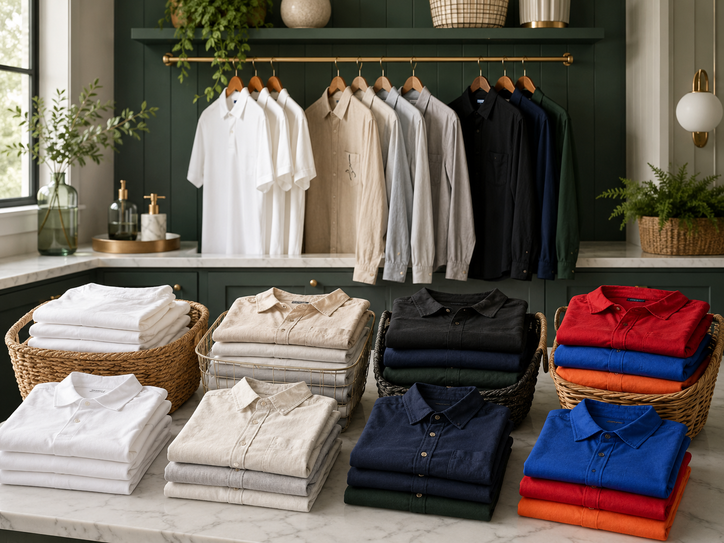
Quick Comparison
Which Clothes Should Be Washed Together?
| Laundry Group | Good to Wash Together | What to Avoid |
|---|---|---|
| Whites | White and very light colourfast garments | New dark or bright garments |
| Light colours | Pale grey, beige, pastel and light shirts | Strong reds, navy, black or new denim |
| Dark colours | Black, navy, charcoal and other dark shades | White shirts that need to stay bright |
| Bright colours | Similar colour families when colourfast | Whites and pale garments |
| New garments | Similar colours for the first few washes | Mixing immediately with whites |

Shirt and Colour Type
Some Shirts Need More Care When Sorting
White T-Shirts
Keep them away from dark loads when possible to reduce dullness and colour transfer.
Black and Navy Shirts
Dark garments may release excess dye, especially when new.
Red and Bright Colours
Strong colours are safer with similar shades until their colourfastness is known.
Pastel Shirts
Pale colours can often be grouped together but should still be protected from dark dye transfer.
Printed T-Shirts
Sort by the garment colour first, then follow the print-care instructions.
Sports Shirts
Separate heavily soiled activewear when needed, even if the colours match.
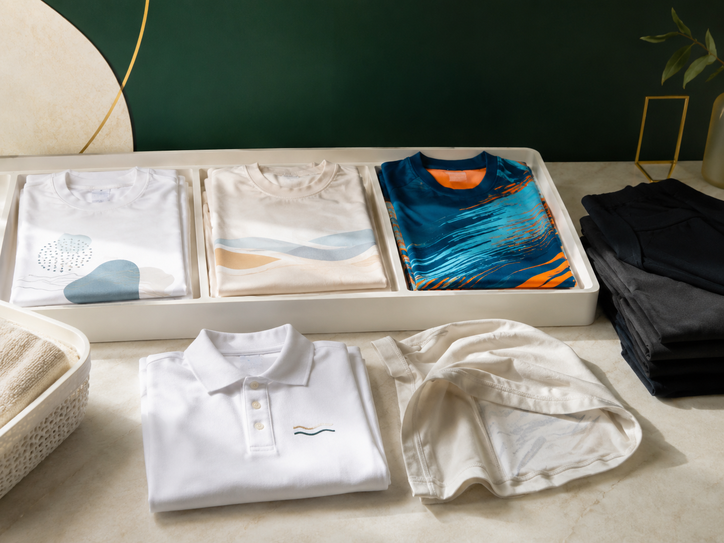
Printing and Branding
Sort by Garment Colour, Then Protect the Decoration
| Branding Method | Sorting Consideration | Better Care |
|---|---|---|
| DTF Printing | Garment dye transfer is separate from print durability | Sort by shirt colour and wash inside out |
| Silkscreen Printing | Dark garment dye can still affect lighter clothes in the load | Keep whites separate and avoid harsh washing |
| Sublimation | Polyester jersey colours still need normal laundry sorting | Group similar shades and follow the garment label |
| Embroidery | Thread colourfastness may differ from the base shirt | Separate strong colours and wash gently |
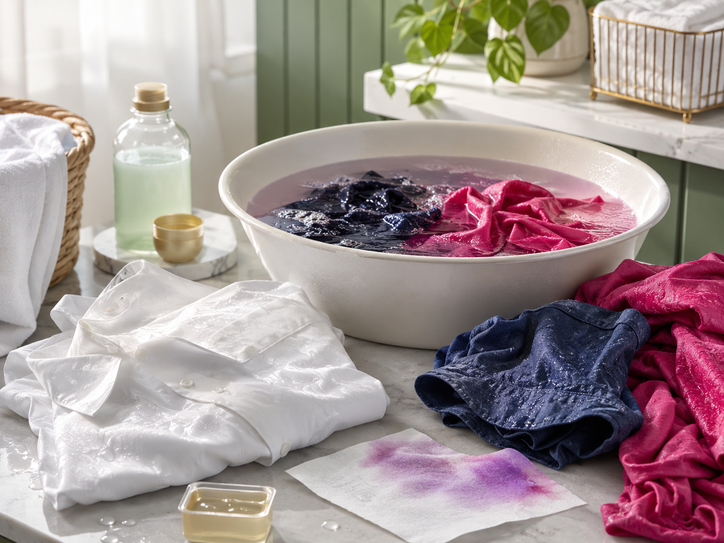
Colour Care
Six Colour-Sorting Habits That Help
Keep Whites Separate
This is the easiest way to reduce grey-looking whites over time.
Be Careful With New Shirts
New dark or bright garments may release more loose dye in early washes.
Group Similar Shades
Dark-with-dark and light-with-light sorting reduces visible transfer.
Use Suitable Water Temperature
Lower temperatures can reduce some colour movement when the care label permits.
Check Colourfastness
If a garment is strongly dyed or unfamiliar, treat it cautiously at first.
Sort by Soil Level Too
Very dirty work shirts may deserve a separate load even if the colours match.

Washing Process
A Simple Laundry Sorting Routine
- Check the care labels. Separate anything that needs a special cycle or temperature.
- Pull out whites. Keep important white shirts away from darker loads.
- Separate darks and brights. Black, navy, red and strong colours are safer with similar shades.
- Check new garments. Wash new dark or bright shirts cautiously during early washes.
- Consider soil level. Heavily soiled work or sports shirts may need their own load.
- Wash and dry according to the label. Sorting by colour does not replace normal fabric-care instructions.
White Staff Shirts
Keep them separate from navy, black and strong-coloured uniforms.
Team Sports Shirts
Group similar colours and separate very sweaty garments if needed.
Event T-Shirts
New printed shirts should be washed with similar colours rather than mixed immediately with whites.

Laundry Checklist
Before Washing Whites and Colours
- Separate whites from dark colours
- Group similar light shades together
- Be cautious with new red, navy and black garments
- Check care labels before combining loads
- Turn printed shirts inside out
- Consider soil level as well as colour
- Use a suitable wash temperature
- Do not overload the washing machine
Do whites really need to be washed separately?
Usually yes, especially if you want white shirts to stay bright and avoid colour transfer from darker garments.
Can light colours be washed with whites?
Very pale colourfast garments may sometimes be washed together, but pure whites are safest in their own load.
Why do white shirts become grey?
Repeated washing with darker items, soil redeposition and detergent or load problems can all make whites look dull.
Should new black or red shirts be washed separately?
It is a good precaution because strongly coloured new garments may release more loose dye during early washes.
Can cold water prevent colour bleeding?
Cooler water can reduce some dye movement, but it does not make every garment colourfast.
Should printed shirts be separated differently?
Sort them mainly by garment colour, then follow any extra print-care instructions such as washing inside out.
Choose Practical Shirt Colours
Need Shirts for Staff, Events or Sports?
Send the intended use, shirt colour, fabric preference, branding method and wash frequency. Uniform Johor can help compare practical shirt options for regular use.
Related Uniform Johor Articles
Regional Network
Our Other Company Websites
JC Print Malaysia
Main company website for uniforms and printing services.
Visit website →SelangorPrint
Uniform and custom printing support for Selangor buyers.
Visit website →Uniform Penang
Uniform and apparel resources for Penang customers.
Visit website →Uniform Sabah
Uniform and custom apparel resources for Sabah buyers.
Visit website →Uniform Singapore
Uniform and apparel printing information for Singapore.
Visit website →Uniform Hub Singapore
Additional uniform resources for Singapore organisations.
Visit website →Tanah Studio
Apparel and creative services for the Australian market.
Visit website →KitaPrint
Printing support for agents and resellers.
Visit website →