
Team Jersey Name Lists: Preventing Spelling and Number Mix-Ups
This guide focuses on a Johor recreational club preparing personalised jerseys for a new season. It explains how a buyer can compare materials, fit, legibility and proofing before production. These are practical planning checks, not claims about a supplier's stock, prices or guaranteed delivery.
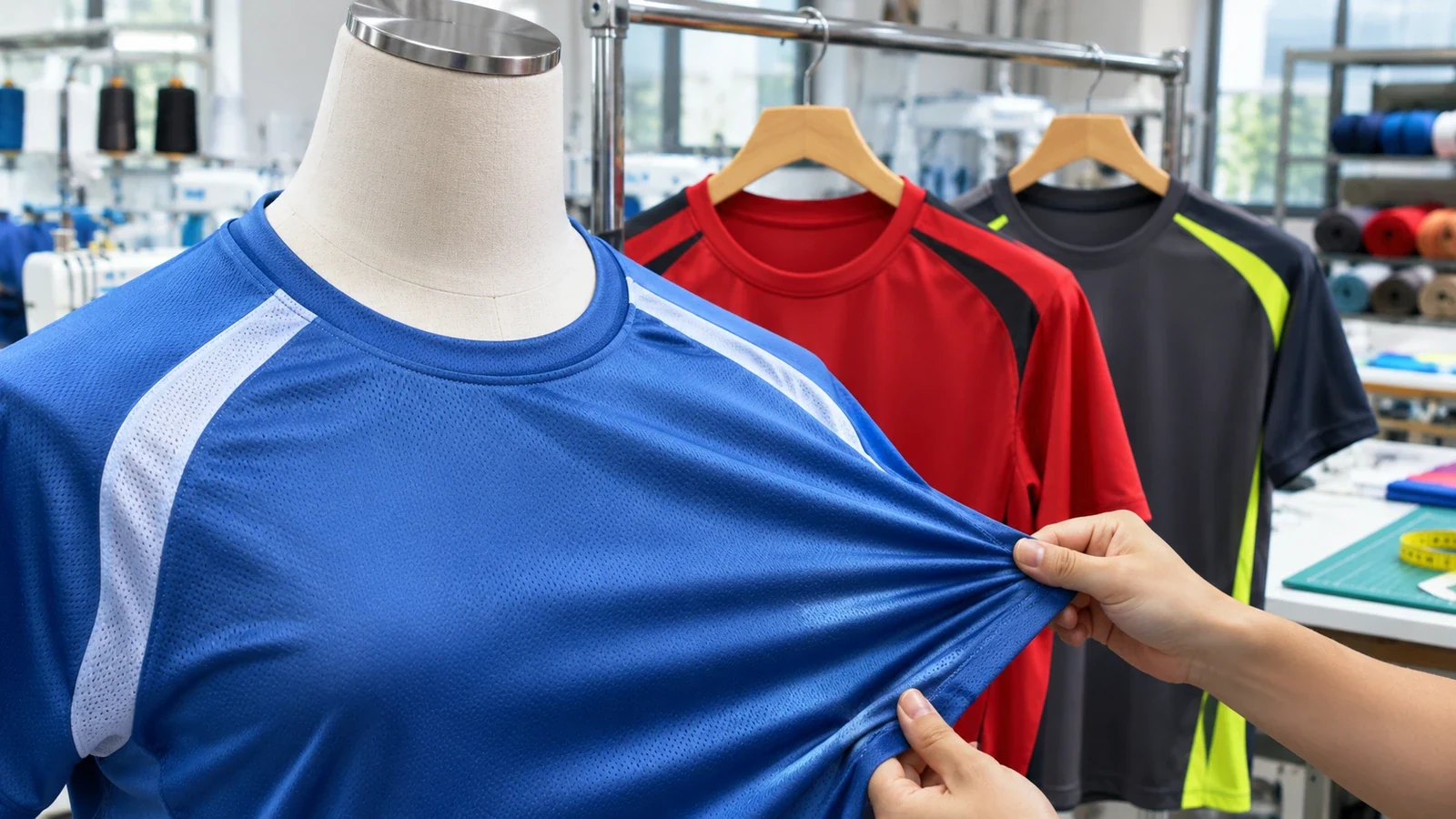
Choose a size chart for active movement
Use checking chest, garment length and shoulder mobility on representative wearers to define what a successful result means for a Johor recreational club preparing personalised jerseys for a new season. Ask which performance issue the recipient will notice first, then examine the product sample with that issue in mind. This avoids purchasing options that add visual complexity but little practical value. Players must select sizes using the actual jersey chart.
The failure to test taking daily T-shirt sizes as proof that jersey cuts will fit identically can create surprise after delivery. Evaluate that risk while a change is still small and affordable. If two sample options differ, record why the selected one is more useful rather than assuming a higher price guarantees it.
Make sure the approved file records collecting a confirmed team roster and testing the smallest and largest sizes. That information should accompany quantity, size or artwork lists at handover. It closes the gap between what a designer intended and what an operator is told to produce.
Treat collar and sleeve construction as design choices
A purchasing brief for a Johor recreational club preparing personalised jerseys for a new season should begin by checking rib tension, seam feel and ventilation during the intended sport. Write down who will use the item and which constraint cannot be compromised. That gives the buyer a way to judge a real sample instead of comparing adjectives in product catalogues. Collar seams should not rub during repeated training.
Before settling on a method, ask whether prioritising appearance while ignoring neck rub or repeated overhead motion is likely. The useful evidence is what happens during the specified task, not a perfect rendering. Put two possible materials or constructions beside each other and record the practical difference.
A clear record should show asking a player to wear a sample for practical movement. Link this to the exact file and sample being priced. If the requirement changes, update that one record rather than allowing the sales discussion and artwork proof to drift apart.
Build a name and number system
Look at the day-to-day routine in a Johor recreational club preparing personalised jerseys for a new season. The important consideration is defining font weight, contrast, line breaks and permitted name lengths; it changes the best balance between appearance and handling. The designer can only make a workable recommendation after the user explains where and how the item is used. Long surnames need controlled text scale rather than tiny lettering.
An attractive mock-up can conceal using narrow letters that disappear against busy printed patterns. Check the cause rather than treating every issue as a printing defect. Sometimes the solution is a different size, an altered placement or a suitable base material, not a more expensive decoration.
Include reviewing back artwork at viewing distance and spelling every roster entry in the buyer sign-off. Keep a dated reference that identifies the chosen dimensions and any limitation accepted in the sample. Production can then reproduce the decision without asking the approver to start again.
Leave sponsor artwork away from seams
The first comparison should answer how checking logos against shoulder curvature, side panels and cutting allowances works for a Johor recreational club preparing personalised jerseys for a new season. Practical handling and repeated use usually matter more than a single product photograph. Use an actual garment, board or sample to expose relevant trade-offs before final artwork is prepared. Sponsor art must not compete with back numbers.
If the buyer overlooks expecting perfect visual alignment across every manufactured seam, a small design detail may become a recurring operational problem. Inspect the proposed item at the intended scale, identify which part is affected, and test a correction on that part only.
Request written confirmation of approving individual panel templates rather than a single flat composite. The purpose is not extra paperwork: it gives the packing team, printer and customer the same agreed target. A later adjustment should be attached to the same specification with a new revision.
Check every player-specific file before production
For this order, the key question is whether keeping one source of truth for name, number, size and garment cut has been considered in a Johor recreational club preparing personalised jerseys for a new season. Discuss the physical setting with the supplier and identify the stage when a sample will be available. Making that decision early reduces late changes that affect several production steps. The locked roster needs a second check before print export.
A trial should deliberately look for accepting multiple inconsistent spreadsheet revisions from different team managers. Do not use only the best-lit angle or a stretched digital image when making the judgement. Simulate the movement, lighting or handling conditions that are most likely to reveal the weakness.
The final instruction should specify exporting a final roster for signed approval and per-player packing. It must be understandable by someone who was not in the original call. Attach photographs and measured notes so the next production or purchasing team has the same reference.
A pre-production checklist for this order
For a Johor recreational club preparing personalised jerseys for a new season, send a consistent specification rather than a product photograph alone. The checklist covers enough information for a meaningful quotation and a clear approval.
- Use and audience: State who handles or wears the item and what matters most during normal use.
- Material and fit: Record the approved product, construction, measurements or sample reference.
- Artwork: Supply a source file, measured placement and a single revision number.
- Proofing: Confirm the physical or print-size sample and who has authority to approve it.
- Handover: Verify the packing list, receiving details and conditions for repeat orders.
Frequently asked questions
What is the first thing to check when ordering team jersey name number list?
Begin with the actual use case: checking chest, garment length and shoulder mobility on representative wearers. State the wearer or audience, handling conditions and the quantity before selecting finishes. A buyer who starts from these constraints can compare quotes without accidentally comparing different specifications.
Why is a digital mock-up not enough for team jersey name number list?
A screen can show proportions, but it cannot demonstrate real fabric movement, glare, adhesion, sewing distortion or how a product is packed. In particular, check for prioritising appearance while ignoring neck rub or repeated overhead motion. Review a physical or full-size proof whenever the decision carries financial or operational risk.
How should a buyer approve the final sports team jerseys specification?
Use one current artwork revision and record the measurable conditions, including approving individual panel templates rather than a single flat composite. The person signing off should know which sample or proof is authoritative and whether any outstanding changes affect pricing, method or quantity.
What should be retained for the next order?
Keep the accepted artwork, material and size information, plus photographs, exporting a final roster for signed approval and per-player packing. Label these files by project and revision so a new team member can order matching stock without assuming that a similar-looking substitute will behave the same.
If the next step is a quotation, prepare the sizes, artwork, quantity, receiving location and intended use before contacting the supplier. You can review UniformJohor.com ordering information and ask for an order-specific assessment; no general article can confirm stock or a delivery deadline.