
Embroidery Services Johor
Pros and Cons of Embroidery
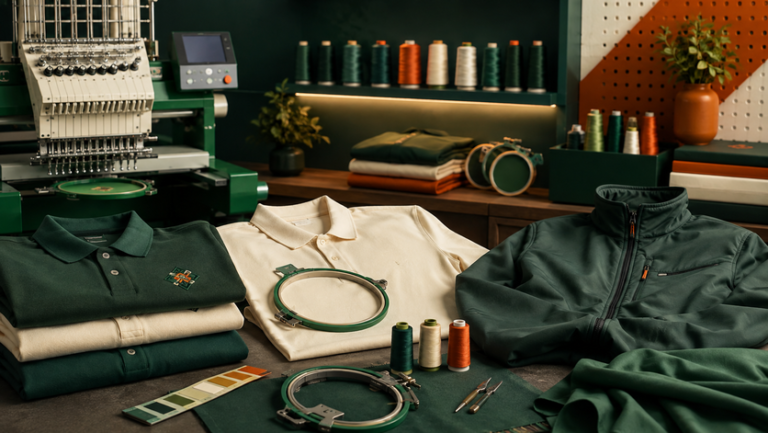
Embroidery gives uniforms a structured, professional finish and works especially well for compact logos on polos, jackets and caps.
Direct answer: the biggest advantages of embroidery are its premium appearance, strong dimensional texture and suitability for small corporate logos. The main limitations are added weight, less flexibility for very large graphics, difficulty reproducing tiny details and gradients, and the need to digitise artwork into stitches. Embroidery is strongest when the design is compact, clear and intended to look polished rather than photo-realistic.
Quick Comparison
Embroidery Pros and Cons at a Glance
| Factor | Advantage | Possible Limitation |
|---|---|---|
| Appearance | Premium, structured and professional | Not ideal for every casual or graphic-heavy shirt style |
| Durability | Stitching can hold up very well with normal garment care | Loose threads or puckering can appear if setup is poor |
| Small logos | Excellent for chest, sleeve and cap branding | Tiny text and extremely fine details may need simplification |
| Large artwork | Can create bold textured designs | Large stitch areas become heavier, stiffer and more expensive to produce |
| Colour | Strong solid thread colours | Gradients and photo-style colour transitions are limited |
| Garment choice | Very suitable for polos, jackets, caps and structured items | Very light or stretchy fabrics may need extra support and testing |
Garment Options
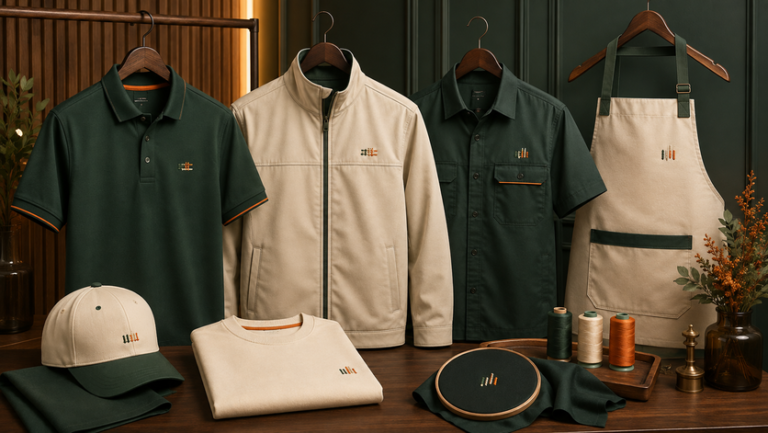
Where Embroidery Works Well
Polo Shirts
One of the most common choices for small chest logos and staff branding.
Corporate Jackets
Suitable for premium chest or sleeve branding on structured outerwear.
Caps and Hats
Embroidery works well on structured headwear with compact logos.
Work Shirts
Useful for names, departments and durable company branding.
Aprons
Good for F&B and service teams when a clean professional logo is needed.
Heavier T-Shirts
Can handle small embroidered logos better than very light, thin tees.
Printing and Branding
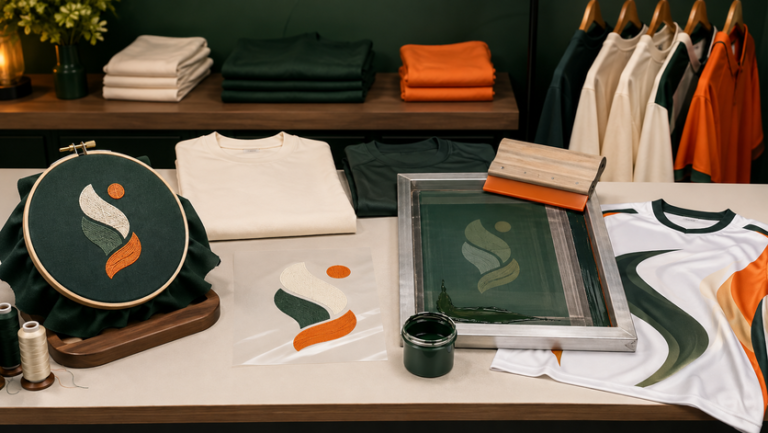
When Embroidery Is Better — and When It Is Not
| Method | Where It Can Beat Embroidery | Where Embroidery Can Be Stronger |
|---|---|---|
| DTF | Full-colour artwork, gradients and large graphics | Small premium logos on polos and jackets |
| Silkscreen | Large repeated front or back prints | Compact dimensional branding |
| Sublimation | All-over sports jersey graphics | Small logos on structured garments |
| Heat Transfer Vinyl | Simple names and numbers on activewear | Premium stitched names or compact logos |
- Use embroidery when the logo is compact and premium appearance matters.
- Use DTF when the design needs gradients, photos or many small colours.
- Use silkscreen when the same larger design repeats across many T-shirts.
- Use sublimation when the whole polyester jersey is part of the design.
Material, Colour and Design
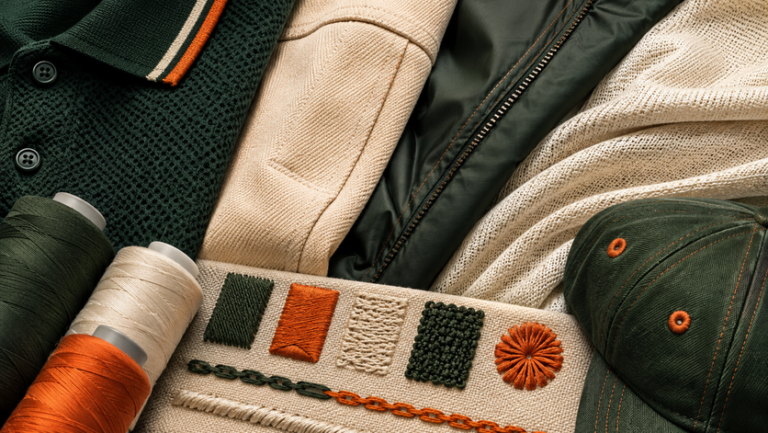
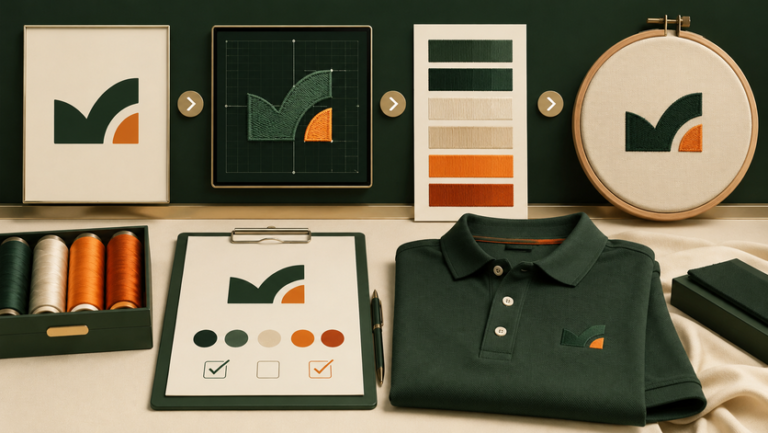
Good Embroidery Starts With Good Digitising
Artwork Digitising
Logos must be converted into stitch paths, directions and densities before embroidery.
Small Text
Very small lettering may need to be enlarged or simplified for clean stitching.
Fabric Stability
Structured fabrics usually handle embroidery better than very thin or stretchy materials.
Stitch Density
Too many stitches in one area can make the fabric stiff or cause puckering.
Thread Colour
Solid thread colours work best; gradients usually need to be approximated.
Logo Size
Compact logos are usually more comfortable and practical than very large stitched areas.
Ordering Process
How to Decide Whether Embroidery Is Right for Your Order
- Check the logo. Simple logos with clear shapes are easier to embroider cleanly.
- Choose the garment. Polos, jackets and caps usually provide good structure.
- Confirm the logo size. Keep the stitched area practical and proportional.
- Choose thread colours. Match the brand colours as closely as possible.
- Approve the embroidery sample. Check lettering, spacing and stitch density.
- Save the final embroidery file. Keep the approved specification for future repeat orders.
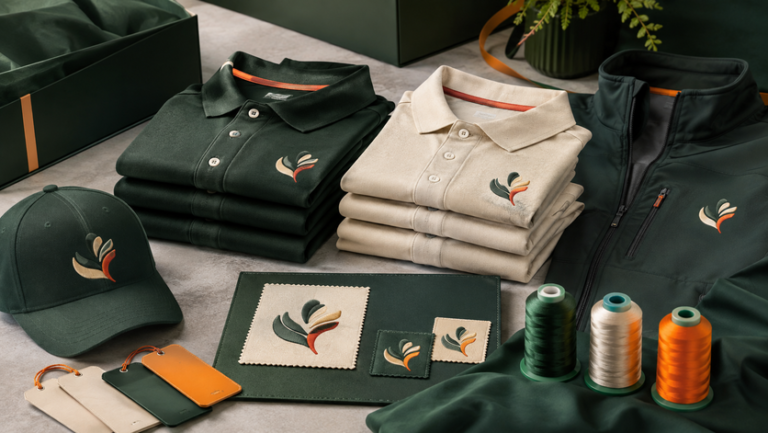
Corporate Polo
Embroidery is a strong choice for a compact chest logo and professional appearance.
Workwear
Useful for company names, staff names and department identification.
Caps and Headwear
Works well for simple front logos when the cap construction supports embroidery.
Buyer Checklist
Before Choosing Embroidery
- Confirm the logo is suitable for stitching
- Choose a garment with enough structure
- Keep the embroidery size practical
- Check tiny text and fine details
- Select thread colours carefully
- Approve the digitised sample before production
- Check placement on different garment sizes
- Save the approved embroidery specification for repeat orders
What is the biggest advantage of embroidery?
Its premium stitched appearance makes it especially suitable for corporate polos, jackets, caps and structured uniforms.
What is the biggest disadvantage of embroidery?
Large or very detailed artwork becomes heavier, more complex and less comfortable than a small embroidered logo.
Is embroidery better than DTF?
It depends on the design. Embroidery is stronger for compact premium logos, while DTF is better for large, colourful and highly detailed graphics.
Can embroidery be used on T-shirts?
Yes, but very light or stretchy T-shirts may need careful stabilisation and a smaller embroidery area.
Can embroidery reproduce gradients?
Not in the same way as printing. Gradients usually need to be simplified into solid thread colours or special stitch effects.
Why does embroidered artwork need digitising?
The embroidery machine needs stitch paths, stitch directions and densities rather than a normal image file alone.
Compare Branding Methods
Not Sure Whether Embroidery Fits Your Logo?
Send the garment type, quantity, logo, preferred embroidery size and placement. Uniform Johor can help compare embroidery with DTF, silkscreen or sublimation for the job.
Related Uniform Johor Articles
Regional Network
Our Other Company Websites
JC Print Malaysia
Main company website for uniforms and printing services.
Visit website →SelangorPrint
Uniform and custom printing support for Selangor buyers.
Visit website →Uniform Penang
Uniform and apparel resources for Penang customers.
Visit website →Uniform Sabah
Uniform and custom apparel resources for Sabah buyers.
Visit website →Uniform Singapore
Uniform and apparel printing information for Singapore.
Visit website →Uniform Hub Singapore
Additional uniform resources for Singapore organisations.
Visit website →Tanah Studio
Apparel and creative services for the Australian market.
Visit website →KitaPrint
Printing support for agents and resellers.
Visit website →