
Compare material/method
Anti-Bacterial T-Shirts:
Do They Help?
Anti-bacterial finishes can reduce bacterial growth on treated fabric, but the real benefit depends on the treatment, test result, wash durability, fabric type and how the shirt is actually used.
Direct answer: yes, an anti-bacterial T-shirt can help reduce bacterial growth on the fabric itself when the treatment is effective. That may support freshness or odour control in some garments, but it does not make the wearer germ-proof and it does not replace washing, drying or changing sweaty shirts. Buyers should look beyond the words “anti-bacterial” and ask what was tested, how strong the result was, and whether the effect remains after repeated washing.
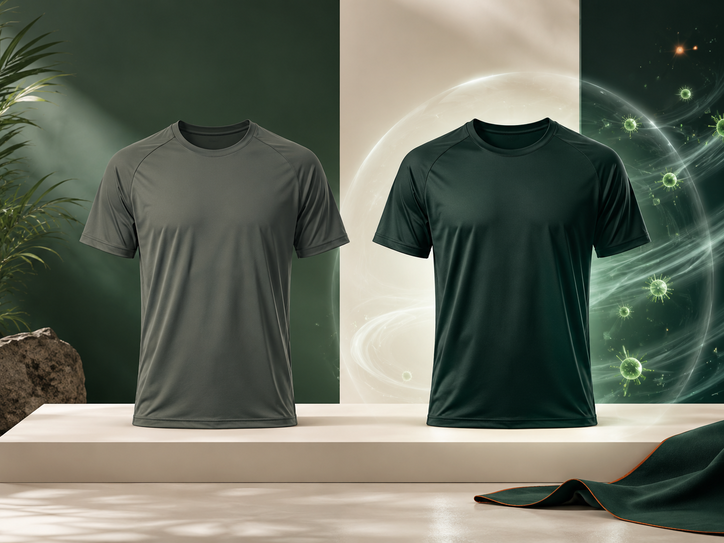
Quick Comparison
What Anti-Bacterial Shirts Can and Cannot Do
| Claim | Reasonable Expectation | Important Limit |
|---|---|---|
| Reduce bacteria on fabric | Possible when the treatment has demonstrated antibacterial activity | Performance depends on the chemistry, fabric and test conditions |
| Help with odour | May help when bacterial activity contributes to fabric odour | Odour is influenced by sweat, skin oils, fibre type and washing too |
| Stay fresher during activity | Can be useful as one part of a performance fabric system | Moisture management and drying speed still matter |
| Replace washing | No | Shirts still need normal laundering and complete drying |
| Prevent illness or infection | Do not assume this | Textile-protection claims are not the same as public-health protection |
| Last forever | No universal guarantee | Wash durability varies significantly between treatments |

Shirt Options
Where Anti-Bacterial Finishes May Be Useful
Quick-Dry Sports Shirts
Useful for active teams where sweat, repeated wear and fabric odour are common concerns.
Performance Polos
Suitable for staff who move between customer-facing work and active environments.
Work T-Shirts
Can be useful for operations, warehouse and outdoor teams when paired with good moisture handling.
Long-Sleeve Performance Shirts
More coverage means more fabric in contact with sweat, making drying and laundering especially important.
Kids' Activity Shirts
May be marketed for active use, but comfort, fabric safety, wash care and product-specific claims still need checking.
Standard Untreated Shirts
Can still perform very well when fabric breathability, drying speed and laundering routines are appropriate.
| Buyer Priority | What to Compare |
|---|---|
| Less lingering odour | Antibacterial claim + fibre type + wash durability + drying speed |
| Outdoor comfort | Fabric weight + knit openness + moisture handling + fit |
| Daily work use | Durability + wash care + colour + print compatibility |
| Long-term performance | How the treatment performs after repeated laundering |

Printing and Branding
Decoration Still Affects How a Shirt Feels
DTF Printing
Works for colourful logos and names, but a very large solid transfer can reduce airflow over the covered area.
Silkscreen Printing
Good for repeated group artwork. Ink coverage and print area can influence the local fabric feel.
Embroidery
Best kept relatively compact on light performance fabrics because stitched areas add weight and thickness.

Material, Colour and Design
The Finish Is Only One Part of Shirt Performance
Fibre Type
Cotton and polyester interact differently with moisture, skin oils and odour-producing microbes.
Knit Structure
Eyelet and other open knits can improve airflow independently of any antibacterial treatment.
Fabric Weight
A lighter fabric may dry faster, while a heavier fabric can feel more substantial. GSM alone does not indicate antibacterial performance.
Wash Durability
Some treatments retain strong activity after repeated washing, while others may lose effectiveness sooner.
Tested Claim
A useful product description should explain what property was tested rather than relying only on marketing words.
Drying Routine
Even treated shirts should be washed promptly and dried fully instead of being stored damp.

Ordering Process
What to Ask Before Buying Anti-Bacterial Shirts
- Ask what “anti-bacterial” means for that product. Find out whether it refers to a tested fabric treatment, fibre technology or a general marketing description.
- Ask what was tested. A meaningful claim should identify the property being measured, such as bacterial reduction on the textile.
- Check wash durability. Ask whether the performance is expected to remain after repeated laundering.
- Compare the base fabric too. Look at fibre, GSM, knit structure, fit and drying behaviour.
- Plan branding carefully. Large dense prints may affect airflow even when the underlying fabric is designed for performance use.
- Keep normal hygiene routines. Wash sweaty shirts promptly and dry them completely before reuse or storage.
Sports Team
Anti-bacterial performance can be useful, but quick drying and airflow may be just as important during activity.
Outdoor Work Team
Compare treatment durability with shirt rotation, wash frequency and moisture management.
One-Day Event
For short-term wear, colour, fit, fabric comfort and printing may matter more than paying extra for a special finish.
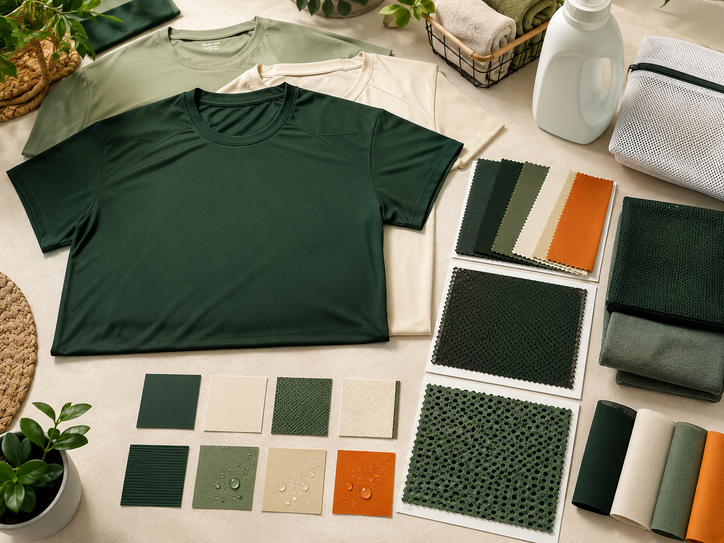
Buyer Checklist
Before Choosing an Anti-Bacterial T-Shirt
- Ask what property was actually tested
- Check whether the claim applies to the fabric or to the wearer
- Look for information on wash durability
- Compare fibre type, knit structure and GSM
- Check drying speed and moisture handling
- Consider print size and airflow
- Follow the garment care instructions
- Do not treat the shirt as a replacement for washing or hygiene
Do anti-bacterial T-shirts really work?
Some treated textiles can show strong antibacterial activity in laboratory testing. The useful question is whether the specific shirt has a tested treatment and whether that performance remains after normal laundering.
Do anti-bacterial shirts stop body odour?
They may help reduce odour associated with bacterial activity on the fabric, but odour also depends on sweat, skin oils, fibre type, drying and washing.
Do anti-bacterial shirts prevent infection?
Do not assume that. A textile treatment designed to protect the fabric or control bacteria on the textile is not automatically a public-health protection claim for the person wearing it.
Does the anti-bacterial effect wash out?
It depends on the treatment. Research shows that some finishes can remain effective through many wash cycles, while durability varies by chemistry and application method.
Is anti-bacterial fabric more important than quick-dry fabric?
Not always. For hot and active use, airflow, moisture handling and drying speed can have a major effect on comfort and freshness.
Should I pay more for an anti-bacterial shirt?
It can be worthwhile for repeated active use if the treatment is well documented and durable. For occasional wear, base fabric, fit and print quality may matter more.
Compare Performance Shirts
Need Help Choosing a Shirt for Active Use?
Send the activity, work environment, preferred fabric, shirt style, size range and branding requirements. Uniform Johor can help compare practical performance-shirt options without relying on one fabric claim alone.
Related Uniform Johor Articles
Regional Network
Our Other Company Websites
JC Print Malaysia
Main company website for uniforms and printing services.
Visit website →SelangorPrint
Uniform and custom printing support for Selangor buyers.
Visit website →Uniform Penang
Uniform and apparel resources for Penang customers.
Visit website →Uniform Sabah
Uniform and custom apparel resources for Sabah buyers.
Visit website →Uniform Singapore
Uniform and apparel printing information for Singapore.
Visit website →Uniform Hub Singapore
Additional uniform resources for Singapore organisations.
Visit website →Tanah Studio
Apparel and creative services for the Australian market.
Visit website →KitaPrint
Printing support for agents and resellers.
Visit website →