
Compare material/method
What GSM Means When Buying T-Shirts
Learn how fabric weight affects T-shirt feel, opacity, drape, heat, durability and printing before choosing shirts for company, event or group orders.
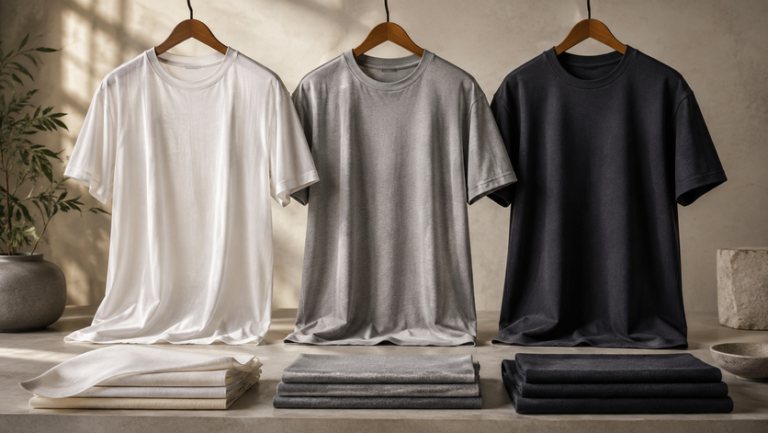
Direct answer: GSM means grams per square metre. It tells you how much one square metre of fabric weighs. A lower GSM shirt is usually lighter and airier, while a higher GSM shirt usually feels thicker and more substantial. GSM is useful, but it does not measure quality by itself. Fabric type, yarn, knit, finishing, fit and construction also affect how a T-shirt feels and lasts.
Quick Comparison
Light, Midweight and Heavy T-Shirts
GSM ranges are not universal rules, but they are useful for comparing shirts within a similar fabric category.
| Approximate GSM | General Feel | Common Strength | Possible Trade-Off | Good Starting Use |
|---|---|---|---|---|
| 120–150 GSM | Lightweight | Airy and easy to move in | May feel thinner or show more through light colours | Events, active use, warm environments |
| 150–180 GSM | Light to midweight | Balanced everyday feel | Not as substantial as heavier fashion tees | Company shirts, team wear, general uniforms |
| 180–220 GSM | Midweight to substantial | More body and opacity | Can feel warmer | Premium uniforms, polos, retail and merchandise |
| 220–260+ GSM | Heavyweight | Structured drape and premium feel | Less suitable for very hot active use | Oversized tees, merchandise, lifestyle apparel |
Lower GSM
Usually feels lighter and less bulky. It can be useful for outdoor events or active roles where heat and movement matter.
Mid GSM
Often gives the best balance between comfort, opacity and everyday durability for uniforms.
Higher GSM
Usually feels more substantial and structured, which can suit premium or fashion-led apparel.
Uniform Options
Match GSM to the Shirt You Are Buying
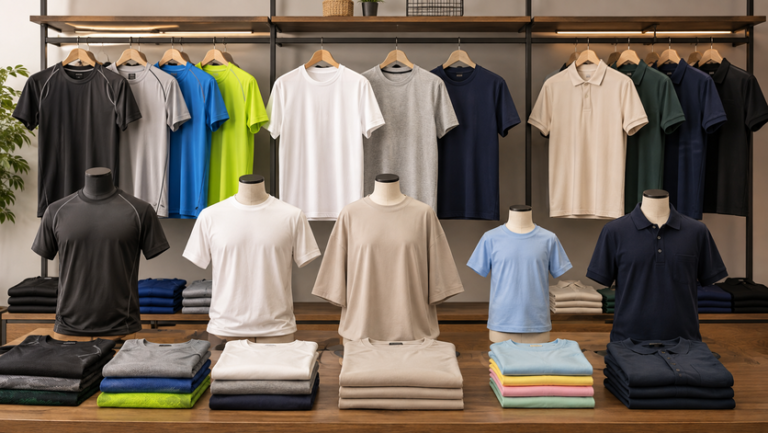
Different product types are designed for different purposes, so the ideal GSM changes with the garment.
Quick-Dry Sports T-Shirts
These are often kept lighter so the shirt feels less heavy during movement. Fabric structure and moisture handling matter more than GSM alone.
Regular Cotton T-Shirts
Midweight cotton is a popular company-uniform choice because it can balance comfort, opacity and a familiar everyday feel.
Polo Shirts
Polos often use a more structured knit, so they can feel heavier than a round-neck shirt even when the GSM difference is not large.
Oversized T-Shirts
Higher GSM is common when the design needs a boxier silhouette, more body and a premium streetwear feel.
Kids' Shirts
Lighter weights can improve comfort, especially for school activities, sports day and active outdoor use.
Work and Staff Uniforms
Midweight fabrics are often a practical starting point when the shirt needs to look presentable and survive regular washing.
| Buyer Priority | GSM Direction | Why |
|---|---|---|
| Cooler active wear | Lower to mid GSM | Less fabric mass and easier movement |
| Everyday company uniform | Mid GSM | Balanced comfort and appearance |
| More opacity | Mid to higher GSM | Heavier fabric can reduce see-through appearance |
| Premium oversized look | Higher GSM | More structure and drape |
Custom Printing
How GSM Affects Printing and Branding
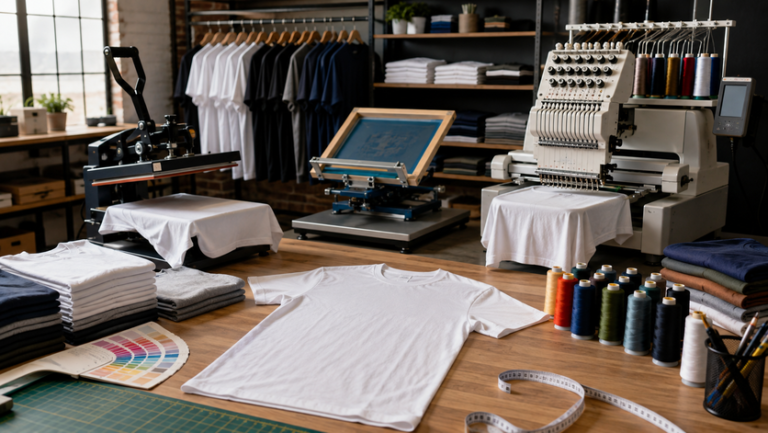
GSM can influence how a shirt behaves during printing, but the fabric type and knit are equally important. A lightweight polyester shirt and a lightweight cotton shirt can react very differently to heat, ink and pressure.
DTF Printing
DTF can work on many T-shirts, but thinner fabrics may show more of the transfer feel. Test heat and pressure before a larger order.
Silkscreen Printing
Midweight shirts often provide a stable surface for repeated logo printing, especially for simple company or event artwork.
Embroidery
Heavier and more stable fabrics generally support embroidery better than very thin T-shirts, especially for dense logos.
| Printing Issue | Lower GSM Shirt | Higher GSM Shirt |
|---|---|---|
| Print feel | Transfer or ink may feel more noticeable | Fabric can better balance larger artwork |
| Embroidery stability | Needs more care with backing and stitch density | Usually more supportive |
| Large artwork | May affect drape more | Often suits larger graphics better |
| Heatpress risk | Thin or sensitive fabric needs careful testing | Still needs testing, but fabric may feel more stable |
- Do not choose embroidery only because the GSM number is high.
- Do not use the same heat setting on cotton and microfiber.
- Do not assume heavier fabric always gives a better print.
- Always test the exact shirt model when artwork is large or detailed.
Material, Colour and Design
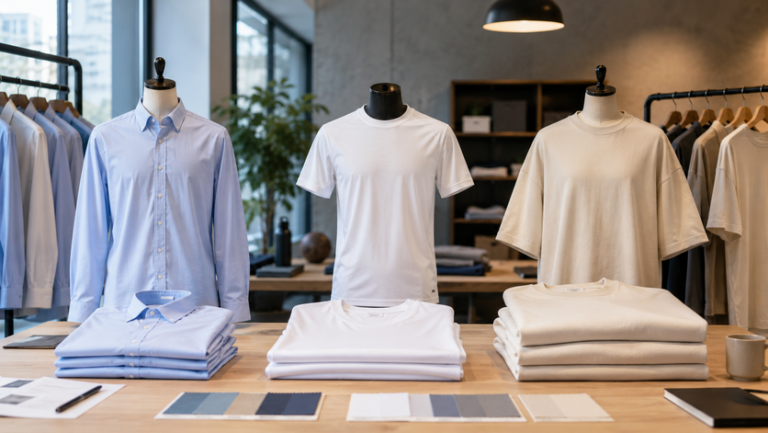
Why the Same GSM Can Feel Completely Different
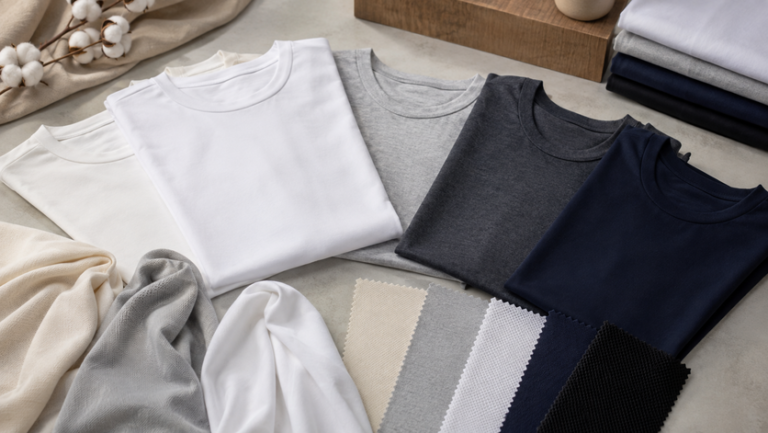
GSM is only one measurement. Fabric fibre, knit, yarn quality, finishing and colour can change the wearing experience even when two shirts have the same stated weight.
Cotton
Cotton often feels natural and familiar. A 180GSM cotton shirt can feel quite different from a 180GSM polyester sports shirt.
Polyester and Microfiber
Performance fabrics can be lightweight while still feeling durable because yarn and knit construction affect strength.
Cotton Blends
Blended fabrics can combine the hand feel of cotton with some of the stability or drying behaviour of synthetic fibres.
| Factor | Why It Matters Together With GSM |
|---|---|
| Fabric fibre | Changes softness, drying behaviour, stretch and heat feel |
| Knit structure | Affects airflow, texture, stretch and surface appearance |
| Yarn quality | Influences smoothness, durability and overall hand feel |
| Colour | Light colours may appear more transparent than dark colours at the same GSM |
| Fit | An oversized 220GSM shirt can feel very different from a fitted 220GSM shirt |
| Finishing | Brushing, enzyme wash, anti-odor treatments and other finishes affect feel |
Buying Process
Choose GSM Based on the Real Wearing Situation
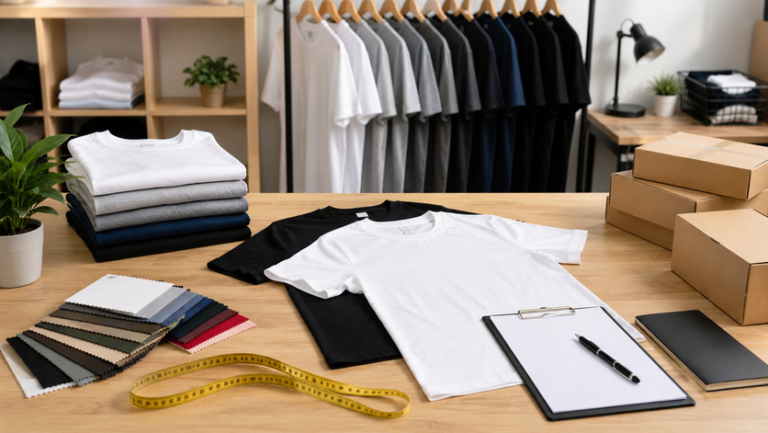
- Identify the use. Decide whether the shirt is for office staff, warehouse work, sports day, merchandise, retail or general events.
- Choose the fabric first. Compare cotton, microfiber, polyester or blends before comparing GSM numbers.
- Set the weight preference. Decide whether the group prefers lightweight, balanced or substantial fabric.
- Check colour and opacity. Light colours may need extra attention, especially for company uniforms worn under bright lighting.
- Review the artwork. Large prints, embroidery and heat-transfer methods can affect how the shirt feels after decoration.
- Approve a sample when possible. Touching and wearing the actual shirt is more useful than judging from GSM alone.
Office and Front Desk
A midweight shirt often gives a cleaner, less flimsy appearance while still remaining comfortable indoors.
Sports Day and Events
Lightweight quick-dry shirts are often easier to wear during active outdoor programmes.
Merchandise and Oversized Tees
Higher GSM often creates the structured drape customers expect from heavier streetwear-inspired apparel.
Buyer Checklist
Before You Approve a T-Shirt
- Confirm the fabric fibre and knit type
- Check the stated GSM
- Compare opacity in the actual shirt colour
- Check fit and size chart
- Review printing or embroidery method
- Test the smallest and largest garment sizes
- Keep the final model code for future reorders
What does GSM stand for?
GSM stands for grams per square metre. It measures the weight of the fabric across one square metre.
Is higher GSM always better?
No. Higher GSM usually means more fabric weight, but quality also depends on fibre, yarn, knit, finishing and construction.
What GSM is good for company uniforms?
A midweight shirt is often a practical starting point, but the best GSM depends on the work environment and fabric type.
What GSM is good for outdoor events?
Lower to mid GSM is often preferred for active outdoor use, especially with quick-dry performance fabric.
What GSM is good for oversized T-shirts?
Many oversized styles use a higher GSM to create more body, structure and a premium drape.
Does GSM affect printing?
Yes, but fabric type matters just as much. Thin, heavy, cotton and microfiber shirts can all react differently to heat, pressure, ink and embroidery.
Can two shirts with the same GSM feel different?
Yes. Yarn, knit structure, fibre content, finishing and fit can make two shirts with the same GSM feel very different.
Choose the Right Fabric Weight
Need Help Comparing T-Shirt GSM?
Send the intended use, preferred fabric, quantity, shirt style, artwork and Johor delivery area. Uniform Johor can help narrow down the most suitable shirt options.
Related Uniform Johor Articles
Regional Network
Our Other Company Websites
Explore related uniform, apparel and printing websites within the same company or regional business network.
JC Print Malaysia
Main company website for uniforms and printing services.
Visit website →SelangorPrint
Uniform and custom printing support for Selangor buyers.
Visit website →Uniform Penang
Uniform and apparel resources for Penang customers.
Visit website →Uniform Sabah
Uniform and custom apparel resources for Sabah buyers.
Visit website →Uniform Singapore
Uniform and apparel printing information for Singapore.
Visit website →Uniform Hub Singapore
Additional uniform resources for Singapore organisations.
Visit website →Tanah Studio
Apparel and creative services for the Australian market.
Visit website →KitaPrint
Printing support for agents and resellers.
Visit website →Disclosure: These are related company or regional network websites and are not presented as independent recommendations.