
Compare material/method
Microfiber vs Cotton for Sports Shirts
Compare comfort, moisture handling, weight, printing options and practical use before choosing shirts for sports days, team events, clubs or outdoor activities.
Direct answer: Microfiber is usually the more practical choice for active sports use because it is designed around lightweight, quick-drying performance. Cotton often feels softer and more familiar for casual wear, but it can hold more moisture during intense activity. The better choice depends on the activity, weather, wearer preference, printing method and budget.
Wear Experience
What Feels Different During Activity?
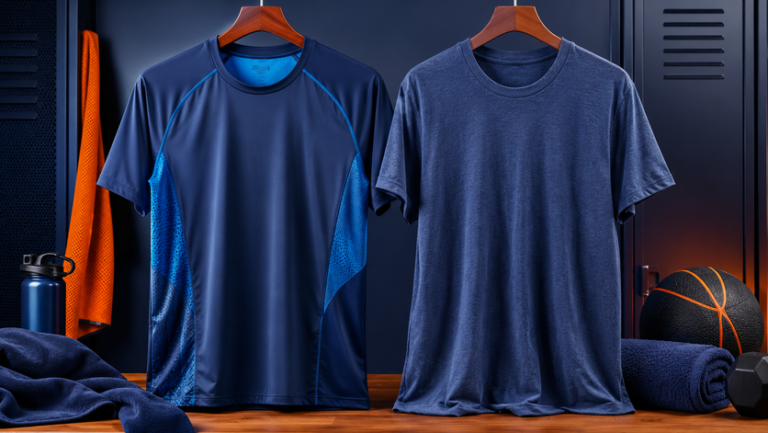
The difference becomes more noticeable once the wearer starts moving, sweating or spending time outdoors. A shirt that feels comfortable in an air-conditioned room may perform differently during a match, fun run or school sports day.
Microfiber
Often chosen for active use because sports-knit microfiber shirts are generally lightweight, quick-drying and easier to manage after sweating.
Cotton
Often preferred for softness and a casual feel, especially for lower-intensity activities, lifestyle wear or events where comfort matters more than moisture management.
Material Comparison
Compare Comfort, Weight and Moisture Handling
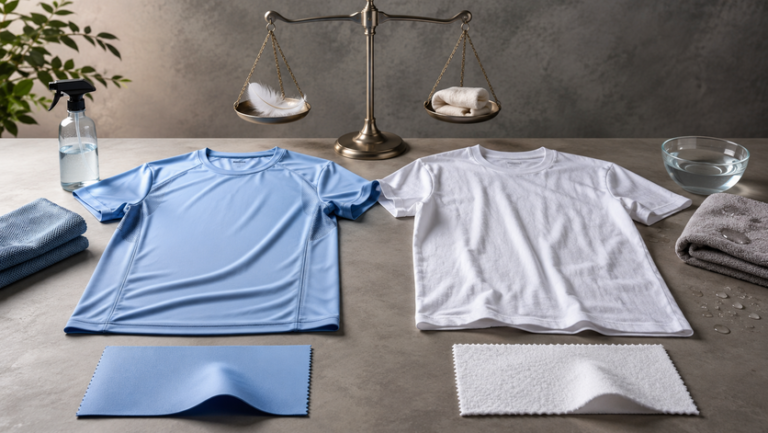
| Comparison Point | Microfiber Sports Shirt | Cotton T-Shirt |
|---|---|---|
| Common feel | Smooth, light and sport-focused | Soft, familiar and casual |
| Moisture behaviour | Usually dries faster after sweating | Can absorb and hold more moisture |
| Best starting use | Sports, running, outdoor activities and active teams | Casual events, lifestyle wear and lower-intensity use |
| Fabric weight | Often available in lightweight sports constructions | Available from light to heavyweight casual styles |
| Surface appearance | More technical or sporty | More natural and everyday |
Active Movement
Microfiber is usually the stronger starting point when players will run, move continuously or sweat heavily.
Low-Intensity Events
Cotton can work well for casual group activities, short indoor events and merchandise-style shirts.
Personal Preference
Some wearers simply prefer the familiar feel of cotton, while others prioritise lighter sports fabric.
Use Scenarios
Match the Material to the Event
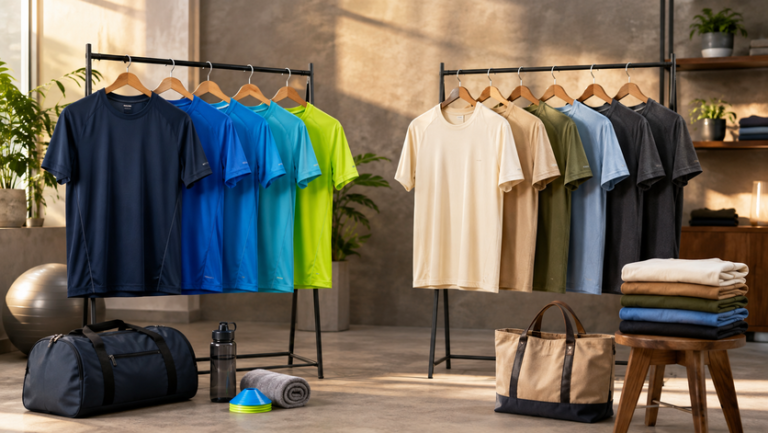
The right answer changes according to the activity. Instead of asking which fabric is universally better, ask which material better supports the people, duration, weather and appearance required for the event.
School Sports Day
Microfiber is usually practical for students and teachers who will be outdoors and moving for several hours.
Fun Run or Marathon
A lightweight microfiber shirt is generally the better starting point for running and higher sweat levels.
Team Building
Choose microfiber for active outdoor games. Cotton may suit a relaxed indoor programme or casual group photo session.
Club Merchandise
Cotton can create a more casual lifestyle look when the shirt is intended for regular everyday wear.
Recreation Teams
Compare microfiber when the shirt is used repeatedly for badminton, futsal, jogging or outdoor practice.
Short Event Campaign
Cotton can be a suitable option when the event is brief, non-athletic and focused on casual branding.
Printing Compatibility
Choose the Printing Method With the Fabric
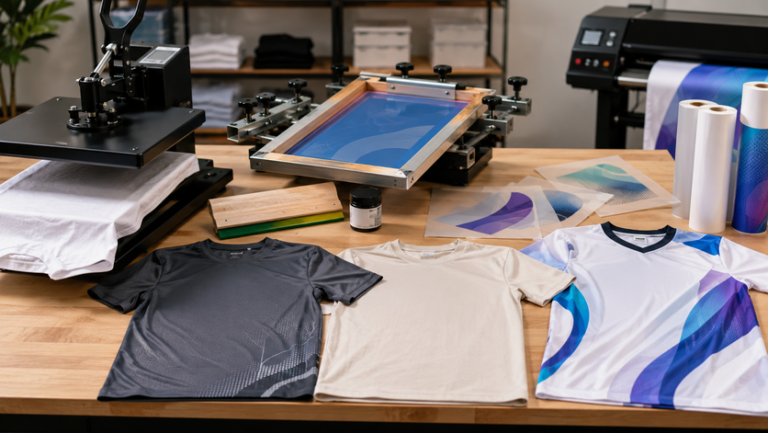
The garment material and decoration method should be planned together. A good print on the wrong shirt can still produce a result that feels unsuitable for the activity.
DTF Heatpress
Suitable for detailed, full-colour logos on many ready-made cotton and microfiber shirts. Confirm the garment surface, print size and position before production.
Silkscreen Printing
Practical for larger quantities with simpler artwork and fewer solid colours. Fabric and ink compatibility should be reviewed with the supplier.
Sublimation Printing
Best suited to purpose-made polyester sports jerseys and all-over designs rather than standard cotton shirts.
| Goal | Material to Consider | Printing Direction |
|---|---|---|
| Active sports shirt | Microfiber or polyester sports fabric | DTF, silkscreen or purpose-made sublimation |
| Casual event shirt | Cotton or cotton blend | DTF or silkscreen |
| All-over custom jersey | Suitable polyester jersey fabric | Sublimation |
| Small professional logo | Structured shirt area | Embroidery may be considered |
- Do not assume every polyester shirt is suitable for sublimation.
- Do not choose the print method before confirming the shirt.
- Do not use an oversized heavy print on a lightweight sports shirt.
- Check the smallest shirt size before fixing print dimensions.
Before Ordering
Use a Simple Selection Checklist
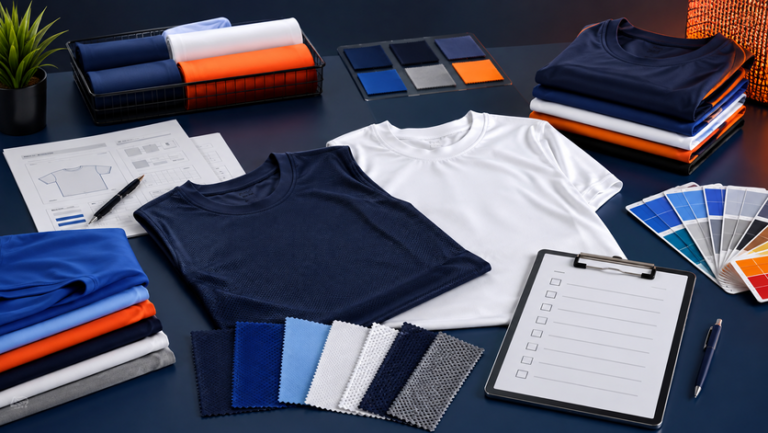
A clear checklist makes the decision easier when several people have different preferences. Compare the same points for both materials before confirming the final order.
- Define the activity level. Decide whether the group will be running, playing, walking, sitting or wearing the shirt casually.
- Consider the environment. Review indoor or outdoor use, expected heat and how long the shirt will be worn.
- Compare the actual shirt models. Check fabric texture, thickness, fit, collar and size chart.
- Choose the print method. Match DTF, silkscreen or sublimation to the shirt and artwork.
- Confirm colours and sizes. Recheck the current stock position before final approval.
- Collect the final order details. Prepare quantities, size breakdown, logo and delivery area.
Choose Microfiber When
- The activity involves heavy movement
- Quick drying is important
- The group wants a sportier appearance
- Outdoor use is expected
- The shirt will be used repeatedly for exercise
Choose Cotton When
- The activity is casual or low intensity
- A softer everyday feel is preferred
- The shirt may become lifestyle merchandise
- The event is mostly indoors
- Natural-feeling casual wear is the main priority
Material FAQ
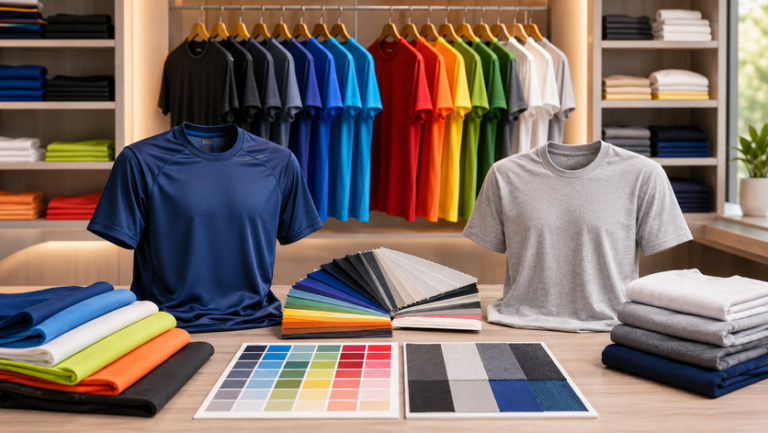
Questions About Microfiber and Cotton
Is microfiber always better for sports?
It is usually the stronger starting point for active sports use, but the final choice still depends on the actual fabric construction, fit and wearer preference.
Is cotton too hot for outdoor events?
Cotton can feel comfortable at first, but it may hold more moisture during heavy activity. For long outdoor sports use, microfiber is often more practical.
Can DTF be printed on both materials?
DTF is commonly used on both cotton and many microfiber shirts. The exact garment, print size and heat application should still be checked before production.
Does lower GSM always mean a cooler shirt?
Not automatically. GSM describes fabric weight, while comfort also depends on knit structure, airflow, fit and how the fabric handles moisture.
Which material is better for school sports day?
Microfiber is usually the more practical choice because students and teachers may be outdoors and active for several hours.
Can Uniform Johor help compare both materials?
Yes. Share the activity, quantity, sizes, budget direction, logo and delivery area so suitable cotton and microfiber shirt options can be compared.
Compare Before Ordering
Need Help Choosing the Right Sports Shirt?
Send the activity type, quantity, sizes, preferred colours, artwork and Johor delivery area. Uniform Johor can help compare microfiber and cotton options before printing.
Related Uniform Johor Guides
Regional Network
Our Other Company Websites
Explore related uniform, apparel and printing websites within the same company or regional business network.
JC Print Malaysia
Main company website for uniforms and printing services.
Visit website →SelangorPrint
Uniform and custom printing support for Selangor buyers.
Visit website →Uniform Penang
Uniform and apparel resources for Penang customers.
Visit website →Uniform Sabah
Uniform and custom apparel resources for Sabah buyers.
Visit website →Uniform Singapore
Uniform and apparel printing information for Singapore.
Visit website →Uniform Hub Singapore
Additional uniform resources for Singapore organisations.
Visit website →Tanah Studio
Apparel and creative services for the Australian market.
Visit website →KitaPrint
Printing support for agents and resellers.
Visit website →Disclosure: These are related company or regional network websites and are not presented as independent recommendations.